
Most warehouses eventually hit the same wall: there's no more room inside, but there's usable space sitting empty outside. Hardstand areas, loading aprons, and side yards are all capable of holding stock, yet they're often left underutilised because no one's confident that outdoor storage can be made to work properly.
The hesitation is understandable, because rain corrodes unprotected steel, UV degrades finishes, and wind shifts unsecured loads. Without the right systems and materials in place, outdoor storage can quickly turn into an expensive maintenance problem rather than a solution.
It's the kind of challenge we see businesses face regularly at Storeplan, and the good news is it's straightforward to fix with the right approach. With galvanised steel that's built to handle the elements, structures engineered for long-term outdoor exposure, and layouts configured around how your site actually operates, outdoor storage stops being a compromise and starts working as a permanent, productive extension of your warehouse capacity.
Why Outdoor Storage Makes Commercial Sense
Indoor warehouse space is expensive. When you factor in rent, fit-out costs, climate control, and lighting, every square metre of floor space carries a significant cost per year. Outdoor space, by comparison, costs a fraction of that to utilise.
For businesses dealing with stock that doesn't require climate control (timber, steel, pipes, concrete products, building materials, agricultural supplies), keeping it indoors is often an unnecessary overhead.
Moving weather-tolerant stock outside also frees up indoor space for items that genuinely need protection: electronics, packaged goods, temperature-sensitive materials, or high-value inventory. The net effect is more usable capacity across your entire site without the cost of a building extension or relocation. It's one of the first things our team at Storeplan looks at during a site assessment, because the space savings are often significant.
What Makes Outdoor Racking Different
Standard indoor racking isn't designed for outdoor conditions, which is why Storeplan specifies galvanised systems for all outdoor installations. Galvanisation is a process where steel components are coated in a protective zinc layer that resists corrosion from moisture, humidity, salt air, and temperature fluctuations.
Galvanised Pallet Racking
Galvanised pallet racking uses the same structural principles as indoor selective racking, but every component (frames, beams, footplates) is hot-dip galvanised for long-term weather resistance. It's suited for palletised goods that can tolerate outdoor exposure: wrapped building materials, bagged products, containerised goods, and heavy equipment.
Galvanised racking typically lasts decades in outdoor conditions with minimal maintenance, compared to powder-coated indoor racking which will begin to corrode within months of weather exposure.
Galvanised Cantilever Racking
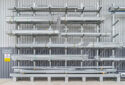
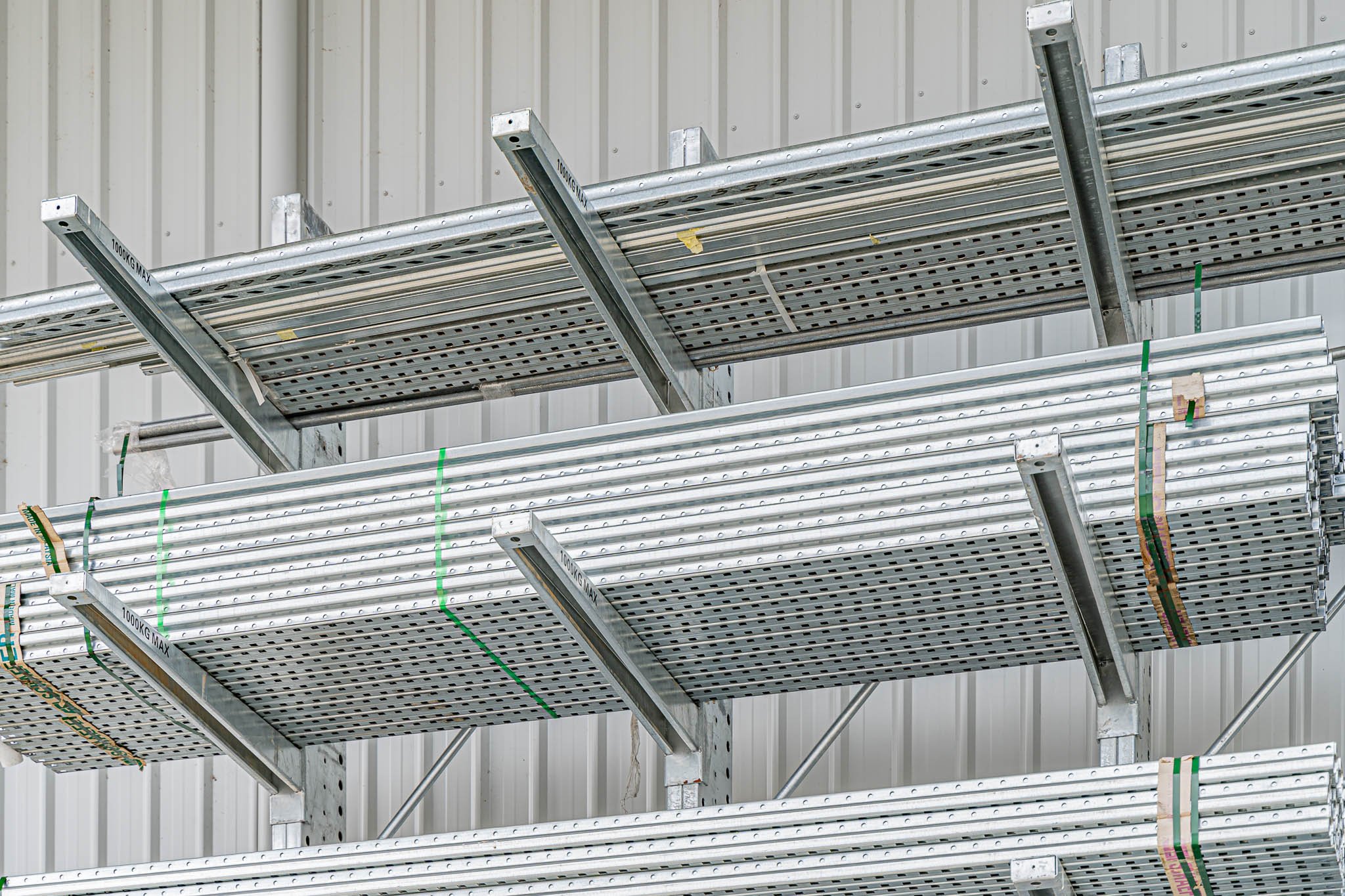
For long, bulky, or irregularly shaped outdoor stock such as timber, steel sections, pipes, conduit, and poles, galvanised cantilever racking provides the same unobstructed access as indoor cantilever, with full weather protection built into the steel.
Cantilever arms are adjustable, so you can reconfigure levels as your stock profile changes. Our heavy duty cantilever racking options are available in galvanised finishes, depending on your load requirements.
Roof Systems
For stock that benefits from overhead protection but doesn't need full enclosure, roof canopies can be fitted to outdoor racking structures. These shield stock from direct rain and UV while maintaining open-air access for forklifts and loading equipment. They're a cost-effective middle ground between fully exposed storage and building an enclosed extension.
Industries That Benefit Most
Outdoor racking delivers significant benefits across a wide range of industries, and Storeplan has designed outdoor storage solutions for many of them. Here's how it typically transforms operations across different sectors:
Building and Trade Supplies
Timber, roofing sheets, concrete blocks, PVC pipes, and structural steel are all candidates for outdoor cantilever or pallet racking. These products tolerate weather exposure and are often too bulky to justify indoor floor space.
Electrical and Plumbing Wholesalers
Conduit, cable trays, strut, and larger pipe stock can be stored outside on galvanised cantilever, freeing indoor space for smaller components and boxed items.
Agricultural and Rural Supplies
Fencing materials, steel posts, feed pallets, and equipment parts are commonly stored outdoors. Galvanised racking handles the harsh conditions of rural and regional sites.
Manufacturing and Fabrication
Raw material storage (steel plate, bar, tube) often doesn't need climate protection. Moving raw stock outside keeps the production floor clear for work-in-progress and finished goods.
Transport and 3PL
Overflow storage for palletised goods waiting for dispatch can move outside on galvanised racking, reducing congestion inside the main warehouse and improving overall efficiency.
Key Considerations Before You Set Up
Before installing outdoor racking, it's important to work through these factors during the planning stage. Our team at Storeplan covers all of these as part of the site assessment process:
1. Ground Preparation
Outdoor racking needs a level, load-bearing surface, and concrete hardstand is the ideal foundation for most installations. Compacted gravel can work for lighter applications, but uneven or soft ground will cause structural problems over time, so it's also worth factoring in proper drainage to prevent water pooling around rack bases.
2. Wind and Weather Exposure
Open sites with high wind exposure may need additional bracing or lower racking heights. Coastal locations face salt-spray corrosion, and while hot-dip galvanisation handles this well, it's worth flagging during the design phase so the right coating specification is selected.
3. Forklift Access
Outdoor racking needs the same clear aisle widths as indoor systems. Plan access paths for the forklift types you're using, and ensure the surface can handle forklift traffic in wet conditions.
4. Load Signage and Compliance
Outdoor racking in Australia must still comply with AS 4084 (Steel Storage Racking), which means safe working load signs, regular inspections, and proper installation are all non-negotiable requirements that apply equally whether the racking is positioned inside or outside.
5. Council and Site Regulations
Depending on your location and the scale of the installation, local council may have requirements around outdoor structures, setbacks, or height limits. It's worth checking early to avoid delays.
Real-World Example: Haymans Electrical, Emerald QLD
When Haymans Electrical upgraded their Emerald branch, they had an existing set of nine separate outdoor cantilever bays that were underperforming due to an inefficient layout, wasted space between bays, and awkward stock access.
Our team reconfigured the existing light duty galvanised cantilever into a single consolidated run of 12 adjoining bays (2400H × 1500W × 900D) with three adjustable arms per column. By reusing the existing steel rather than purchasing new racking, the reconfiguration kept costs down while delivering a significantly better-performing storage setup.
The result:
- A safer, more streamlined outdoor storage area for poles, strut, and other long materials
- Freed-up indoor warehouse space that was previously being used for stock that could tolerate outdoor exposure
- A system that can be adjusted as Haymans' product range evolves
This kind of upcycled reconfiguration is a practical option for businesses that already have outdoor racking but aren't getting the most from it.
Making the Most of What You've Got
Outdoor storage doesn't always mean buying new racking. In some cases, the most cost-effective solution is reconfiguring or relocating existing systems. That might mean consolidating scattered bays into efficient runs, upgrading components, or adding galvanised finishes to extend the lifespan of current stock.
Whether you're starting from scratch or optimising an existing outdoor area, Storeplan's approach is thorough and tailored: we assess the site, understand how your stock moves, and design a system that's purpose-built for your operation.
With over 30 years of experience designing storage solutions for Australian businesses, our team has worked across everything from metro distribution centres to regional trade supply yards. We understand the conditions outdoor racking needs to handle, and we design accordingly.
Ready to turn underused outdoor space into productive storage? We'll assess your site and recommend a solution built for your conditions.