

A cluttered office isn't just an eyesore, it's a drag on productivity. When every flat surface becomes a dumping ground for paperwork, supplies, and equipment, finding what you need takes longer, mistakes creep in, and the workspace starts working against you rather than for you.
The fix isn't always a bigger office. More often, it's smarter storage with systems that keep everything accessible, organised, and off the desk.
Whether you're running a small admin office, a busy dispatch hub, or a warehouse with office space on a mezzanine level, the right storage approach makes a measurable difference to how your team works.
Start with What You're Actually Storing
Before buying shelves or cabinets, take stock of what needs to be stored and how often it's accessed:
- Daily-use items stationery, current project files, tools, reference materials. These need to be within arm's reach.
- Weekly or periodic items archived project folders, spare supplies, seasonal materials. Accessible but not prime real estate.
- Long-term storage compliance records, historical files, equipment manuals. Can be stored further away or in dedicated archive areas.
Grouping items by access frequency is the simplest way to decide what goes where. The items you reach for ten times a day shouldn't be in the same place as last year's tax files.
Shelving Systems for Office Environments
Shelving is the backbone of most office storage setups, and the right system depends on what you're storing and how much space you have.
Open shelving
Open shelving systems offer quick access and clear visibility. They work well for reference materials, binders, sample products, and supplies that are used regularly. The trade-off is that everything is visible, so they suit organised workplaces better than chaotic ones.
Longspan shelving
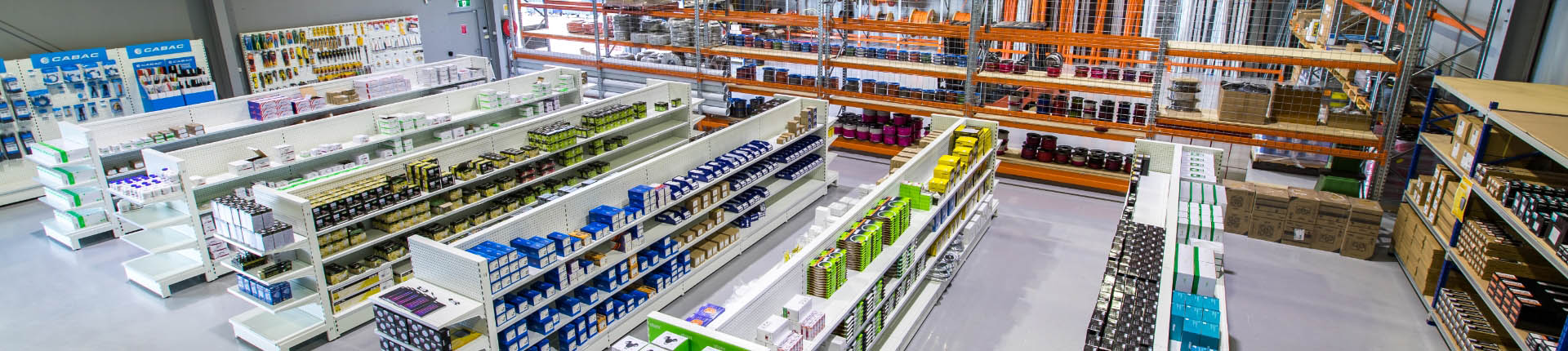
Longspan shelving bridges the gap between light-duty office shelving and industrial racking. It handles heavier loads like archive boxes, bulk supplies, parts bins, catalogues, while still fitting into an office or storeroom environment. It's particularly useful for offices attached to warehouses or workshops where storage needs go beyond standard paperwork.
Mobile shelving
Mobile shelving units sit on tracks and compact together when not in use, opening up an aisle only where you need it. This approach can nearly double your storage capacity in the same floor area. It's common in archive rooms, plan rooms, and offices where space is tight but storage volume is high.
Tambour door cabinets
Tambour cabinets use a sliding door mechanism that doesn't swing outward, making them ideal for narrow spaces and open-plan offices where swinging doors would block walkways. They're a practical choice for storing stationery, files, and personal items near workstations.
Vertical Storage: Using Height, Not Floor Space
Floor space in an office is limited and expensive. Vertical storage makes better use of the space you already have:
- Wall-mounted shelving frees up floor space entirely and works well above desks, benches, and counters
- Tall shelving units that reach close to the ceiling store more per square metre of floor space while just keeping frequently accessed items at comfortable reach height
- Overhead cabinets above workstations provide enclosed storage without using any additional floor area
For offices built on a mezzanine floor within a warehouse, headroom may be a consideration. If you're exploring whether a mezzanine could open up additional storage or office space, our guide on adding a mezzanine to increase storage space is a good starting point. Plan shelving heights around the available ceiling clearance.
Zoning Your Office Storage
Just as a well-designed warehouse uses functional zones, an efficient office benefits from the same thinking:
The active zone
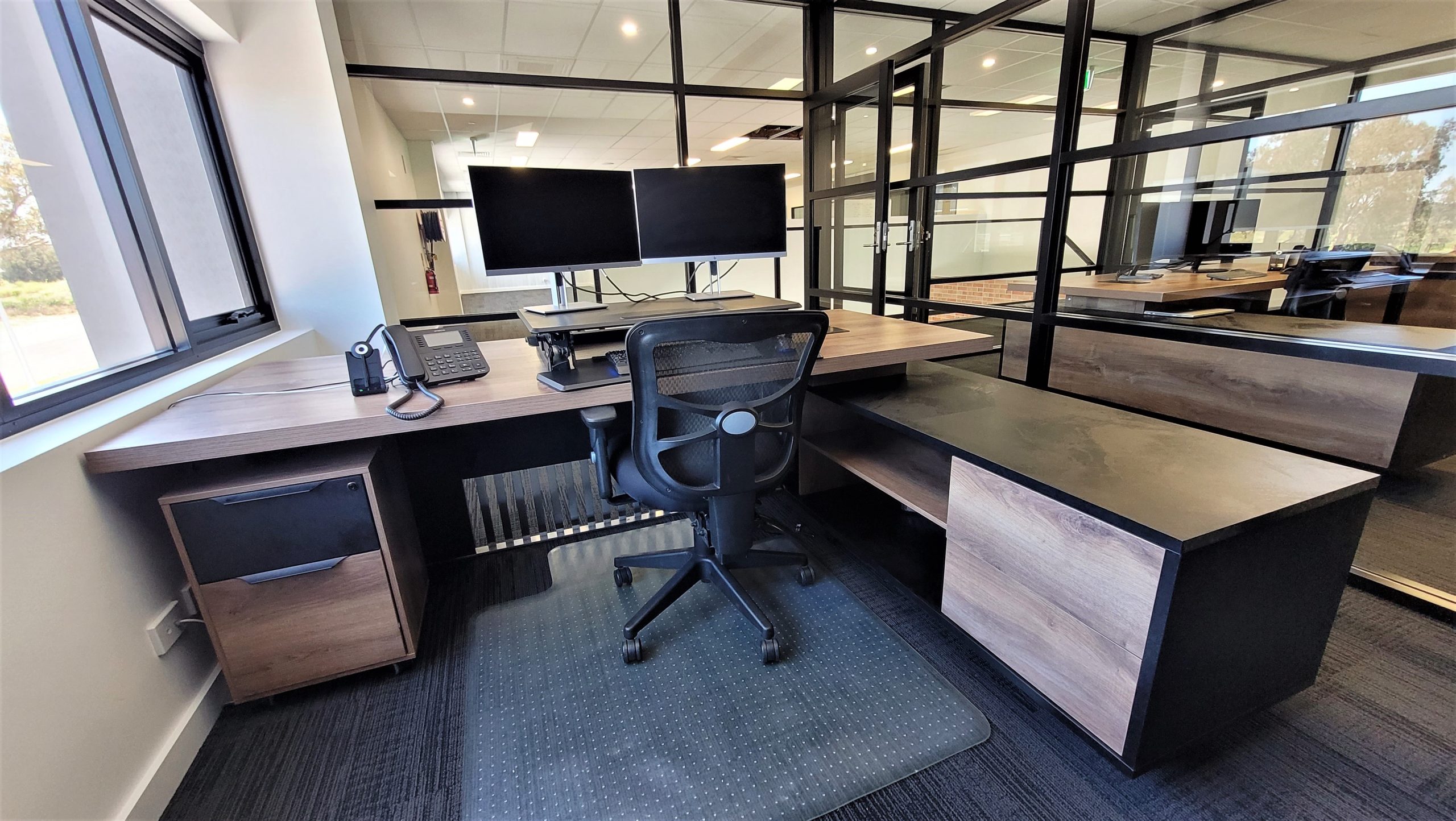
Within arm's reach of each workstation. Desk drawers, desktop organisers, and under-desk pedestals hold daily essentials. Keep this zone lean, if it's not used at least weekly, it doesn't belong here.
The shared zone
Central shelving, cabinets, or a dedicated storeroom for supplies, reference materials, and equipment that the whole team accesses. Position this within easy walking distance of all workstations.
The archive zone
For records, files, and materials that must be kept but aren't regularly accessed. This can be a separate room, a compactus system, or designated shelving bays away from the main work area. If your office is on a mezzanine, archive storage can sometimes be incorporated into the warehouse floor below using industrial shelving.
Digital vs Physical: Finding the Balance
Not everything needs a shelf. Reducing physical storage starts with asking what genuinely needs to exist on paper:
- Digitise where practical scanning documents, using cloud storage for reference materials, and moving to digital workflows all reduce the volume of physical storage needed
- Keep what compliance requires some industries mandate physical records for specific periods. Know your obligations before going paperless
- Don't over-digitise some items (samples, prototypes, plans, signage) are inherently physical and need proper storage solutions
The goal isn't to eliminate physical storage but to make sure every item that takes up space has a reason to be there.
Labelling and Maintenance
Even the best storage system falls apart without basic discipline. Many of the same principles that apply to organising a warehouse also apply at the office level:
- Label everything shelves, drawers, boxes, zones. Clear labels reduce search time and make it easier for new team members to find what they need
- Assign ownership someone needs to be responsible for keeping shared storage areas tidy. Without ownership, communal storage drifts toward chaos
- Schedule periodic cleanouts quarterly reviews of what's stored and whether it still needs to be keep things from accumulating indefinitely
- Return-to-home policy every item has a designated spot, and it goes back there after use. Simple, but effective
Matching Storage to Your Space
The right storage solution depends on your specific environment:
| Office type | Common storage challenges | Solutions to consider |
| Small office / startup | Limited floor space, rapid growth | Wall-mounted shelving, mobile shelving, vertical storage |
| Open-plan office | Noise, visual clutter, shared resources | Tambour cabinets, under-desk pedestals, central storage zone |
| Warehouse mezzanine office | Headroom constraints, heavier items | Longspan shelving, built-in cabinetry, archive zone on warehouse floor |
| Dispatch / coordination hub | High-turnover paperwork, shared reference materials | Open shelving at point of use, wall-mounted document holders |
Getting Organised
Office storage doesn't need to be complicated, but it does need to be intentional. Understanding what you're storing, how often it's accessed, and how much space you have to work with leads to practical solutions that keep your workspace productive.
Our team supplies and installs shelving systems for offices, warehouses, and everything in between. Whether you need a few bays of longspan shelving for an archive room or a full storage fit-out for a new office, we can help you find the right setup.