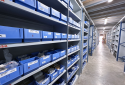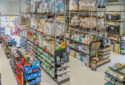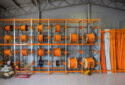

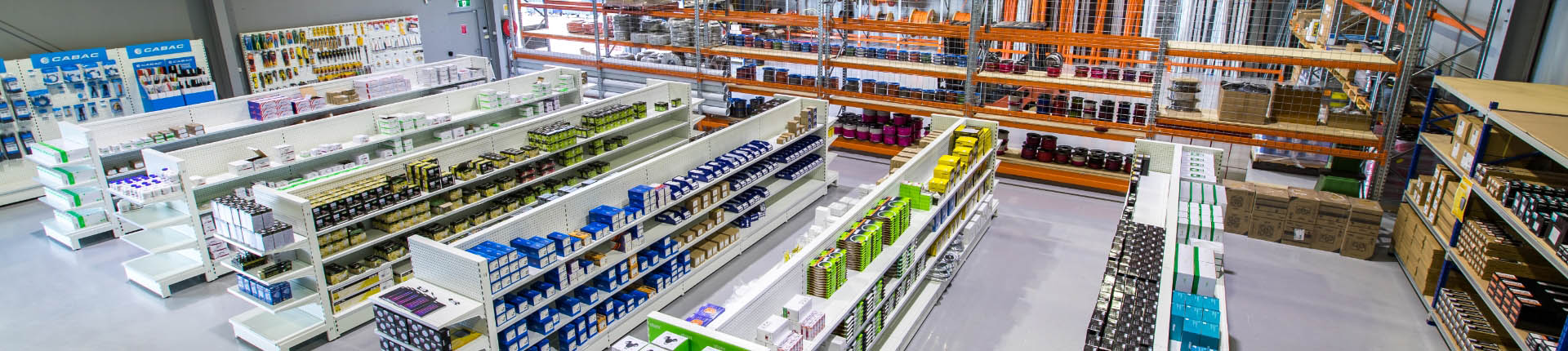
There's a moment every growing business reaches. The warehouse is full. Every beam level is loaded, every aisle is tight, and new stock deliveries are getting staged on the floor because there's simply nowhere left to put them.
At that point, most businesses assume they have two options: relocate to a bigger facility, or build an extension. Both are expensive, disruptive, and slow. A warehouse relocation can cost six figures and take months. A building extension means council approvals, construction timelines, and operational disruption while the work happens around you.
But there's often a third option sitting right outside the roller door.
The Option Most Businesses Overlook
Outdoor storage isn't a new concept, but it's one that many businesses dismiss too early. The assumption is that racking belongs inside and outdoor space is just for parking, skip bins, or overflow that gets rained on.
In reality, a well-designed outdoor racking setup can deliver thousands of additional pallet positions or metres of cantilever storage at a fraction of the cost of additional enclosed space. For stock that doesn't need climate protection (and a significant portion of most inventories doesn't), outdoor racking is a practical, permanent, and cost-effective solution.
The key is knowing when it makes sense and how to do it properly.
Five Signs It's Time to Consider Outdoor Storage
Not every capacity problem calls for outdoor racking. But if you recognise two or more of these signs, it's worth exploring:
1. Weather-tolerant stock is taking up prime indoor positions
Timber, steel, pipes, building materials, wrapped pallets, agricultural supplies: if products like these are occupying your best indoor racking bays while space-sensitive goods are squeezed into corners, your allocation is backwards. Moving durable stock outside immediately frees indoor capacity for items that actually need it.
2. You're floor-stacking because the racking is full
Floor-stacking is the first casualty of a full warehouse. It wastes vertical space, blocks aisles, creates safety hazards, and slows every pick. If your team is routinely placing stock on the floor because there's no bay available, you've outgrown your current system.
3. You have hardstand or concrete apron space that's underutilised
Look at your site from above. Loading aprons, side areas, rear hardstand: is that space doing anything productive? If it's sitting empty or being used for ad hoc parking, it could be holding structured, accessible racking instead.
4. A relocation or extension isn't practical right now
Maybe the lease doesn't allow structural changes. Maybe the budget for a new facility isn't there yet. Maybe you're growing but not enough to justify double the rent. Outdoor racking lets you expand capacity within your existing footprint, buying time until a bigger move makes financial sense, or eliminating the need for one entirely.
5. Seasonal demand spikes are overwhelming your current setup
Businesses with seasonal peaks (harvest periods, construction booms, pre-Christmas surges) often need temporary or semi-permanent overflow capacity. Outdoor racking handles the surge without committing to permanent indoor space that sits empty for half the year.
Businesses with seasonal peaks (harvest periods, construction booms, pre-Christmas surges) often need temporary or semi-permanent overflow capacity. Outdoor racking handles the surge without committing to permanent indoor space that sits empty for half the year.
What Can (and Can't) Go Outside
The decision to move stock outdoors starts with a simple audit of your inventory. Walk through your warehouse and categorise every product line:
Suited for outdoor storage
- Structural steel, aluminium, and metal sections
- Timber and lumber (if air-drying or weather-grade)
- PVC and metal pipes, conduit, cable trays
- Concrete products, pavers, bricks, blocks
- Wrapped or shrink-wrapped palletised goods
- Fencing materials, posts, and rural supplies
- Heavy equipment, machinery parts, and automotive components
Keep indoors
- Electronics, instruments, and sensitive equipment
- Paper, cardboard, and uncoated packaging
- Food, pharmaceutical, and temperature-controlled stock
- High-value inventory prone to theft
- Finished goods requiring clean, dust-free storage
Most businesses find that 20–40% of their current indoor stock could move outside without any issue. That's a significant amount of recovered indoor space, often enough to delay or avoid a costly relocation.
How to Set Up Outdoor Racking Properly
Moving stock outside isn't as simple as wheeling racking through the door. Outdoor systems need to be engineered for the conditions they'll face. Here's what to get right:
Choose galvanised systems
Standard powder-coated racking will begin to corrode within months of outdoor exposure. Galvanisation, a hot-dip zinc coating process, protects steel components from rain, humidity, UV, and salt air for decades with minimal maintenance.
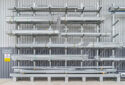
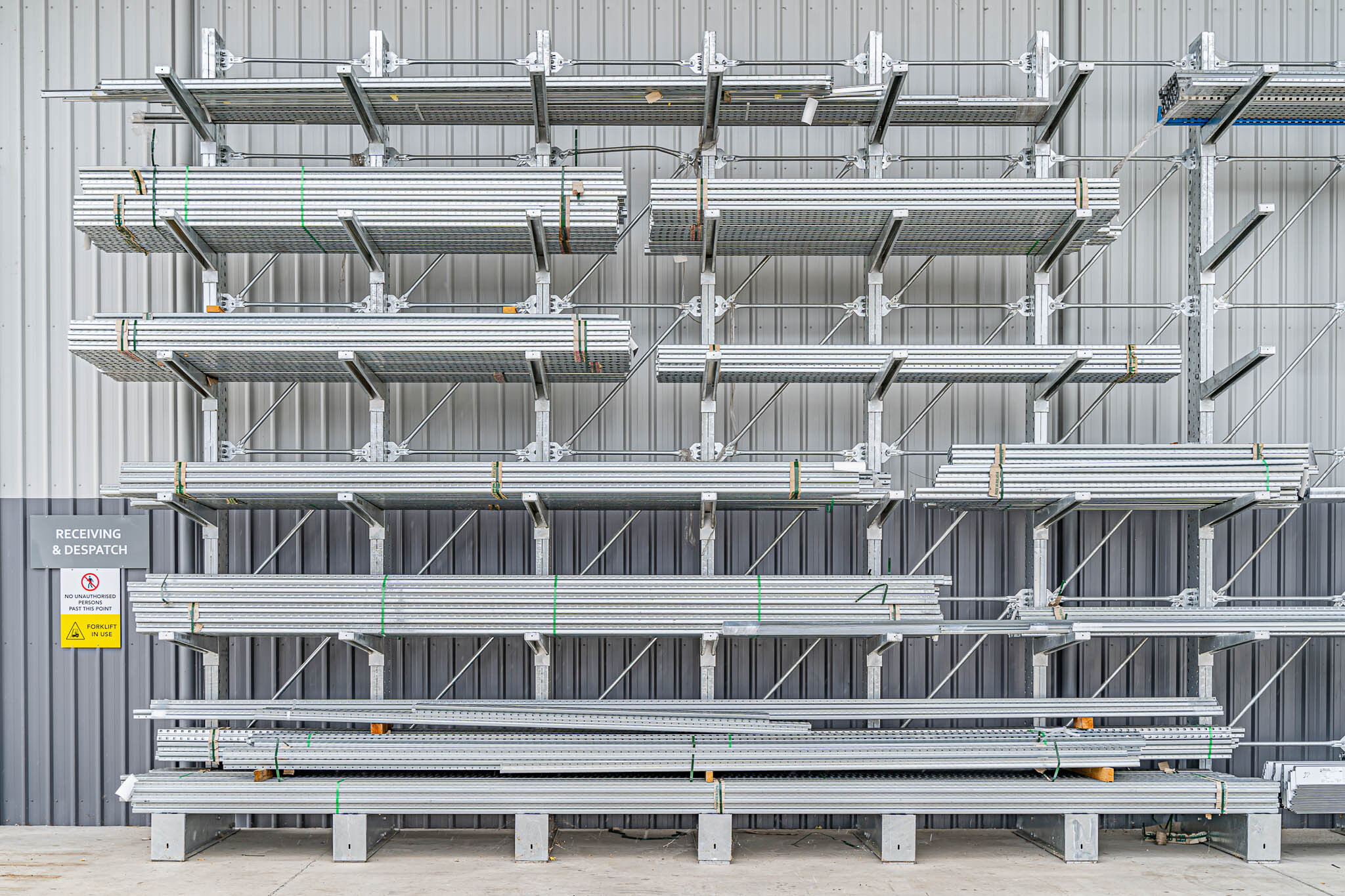
Galvanised pallet racking works for palletised outdoor stock. Galvanised cantilever racking suits long, bulky items like timber, pipes, steel, and conduit. Both are available in heavy duty and light duty configurations depending on load requirements.
Prepare the ground
Outdoor racking must sit on a level, load-bearing surface. Concrete hardstand is the gold standard. Compacted gravel can work for lighter loads, but check with your supplier. Uneven surfaces lead to structural instability, and poor drainage causes water pooling that accelerates corrosion at the base.
Plan forklift access
Your forklifts need the same clear aisle widths outside as they do inside. Design access paths for smooth transitions between indoor and outdoor zones, ideally in straight lines that minimise travel time and turning. Make sure the outdoor surface can handle forklift traffic in wet conditions.
Maintain compliance
Outdoor racking in Australia is subject to the same requirements as indoor systems under AS 4084 (Steel Storage Racking). It's easy to assume the rules are more relaxed outdoors, when in reality the same requirements apply. That means proper installation, safe working load signage, and regular inspections.
Check local regulations
Depending on your council area and the scale of the installation, there may be requirements around outdoor structures, boundary setbacks, or maximum heights. A quick check before you order saves delays later.
Consider roof canopies
For stock that benefits from overhead protection without full enclosure (reducing UV exposure or keeping rain off wrapped pallets), roof systems can be fitted to outdoor racking structures. They're a cost-effective middle ground that extends the range of products you can store outside.
You Don't Always Need New Racking
If you already have racking that's underperforming outdoors (scattered bays, mismatched heights, inefficient spacing), reconfiguration can be more cost-effective than buying new.
When Haymans Electrical upgraded their Emerald, QLD branch, they had nine separate outdoor cantilever bays that weren't working efficiently. Rather than replacing them, our team dismantled the existing light duty galvanised cantilever and consolidated it into a single run of 12 adjoining bays (2400H × 1500W × 900D) with three adjustable arms per column.
Same steel. Smarter layout. The reconfigured system provided a safer, more streamlined outdoor area for poles, strut, and long materials, and freed up indoor space that had been compensating for the inefficient outdoor setup.
This kind of upcycled reconfiguration is worth exploring before committing to a full new installation.
The Business Case in Numbers
While every site is different, here's how the economics typically stack up:
- Warehouse relocation: $100,000–$500,000+ depending on size, fit-out, and downtime
- Building extension: $80,000–$300,000+ depending on scale, plus council approval timelines
- Outdoor racking installation: A fraction of either option, with faster turnaround and no disruption to existing operations
For businesses that need more capacity but aren't ready for a major capital outlay, outdoor racking delivers the extra space at a price point that makes commercial sense.
Getting Started
The first step is always the same: understand your stock, assess your site, and design a system that fits both.
Our team has over 30 years of experience helping Australian businesses expand their storage capacity, including outdoor solutions for trade suppliers, manufacturers, wholesalers, and logistics operators across metro and regional Australia. We've designed storage systems for everything from compact urban sites to large rural compounds, and we understand the conditions Australian outdoor racking needs to withstand.
If your warehouse is full and you're weighing up your options, a site assessment will show you exactly how much additional capacity your outdoor space can deliver.