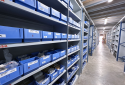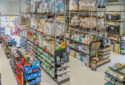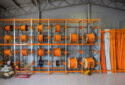
Racking gets described in a lot of different ways, and if you're not in the industry the jargon makes it hard to compare quotes or work out what you're actually being sold. Here's what the components are called and what each one does.
You'll also hear the systems themselves called pallet racks, warehouse racking, industrial racking or heavy duty racking. Those are mostly interchangeable and usually refer to pallet racking of some kind.
Racking Components
Upright
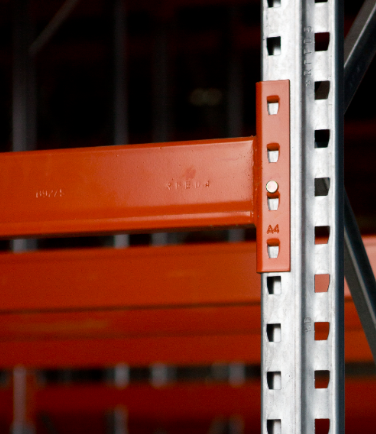
The vertical post. Uprights vary in height and width depending on the total bay load and the weight of your pallets.
They're also the component that takes the damage. Most forklift impacts hit an upright, and a bent one doesn't carry what the sticker says.
Frame
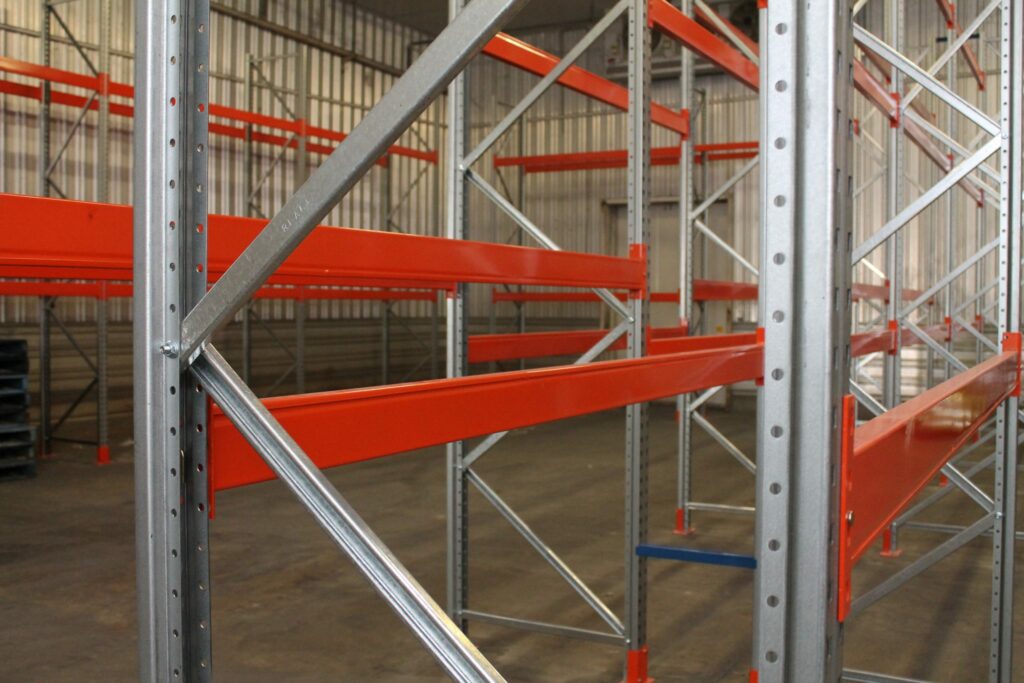
Two uprights joined by cross bracing. Also called an upright frame.
Frame capacity changes with height and bracing pattern, and frame depth is set by the depth of your pallet rather than the stock on it. Standard depth is 840mm, with 1200mm available for larger pallets.
Beam
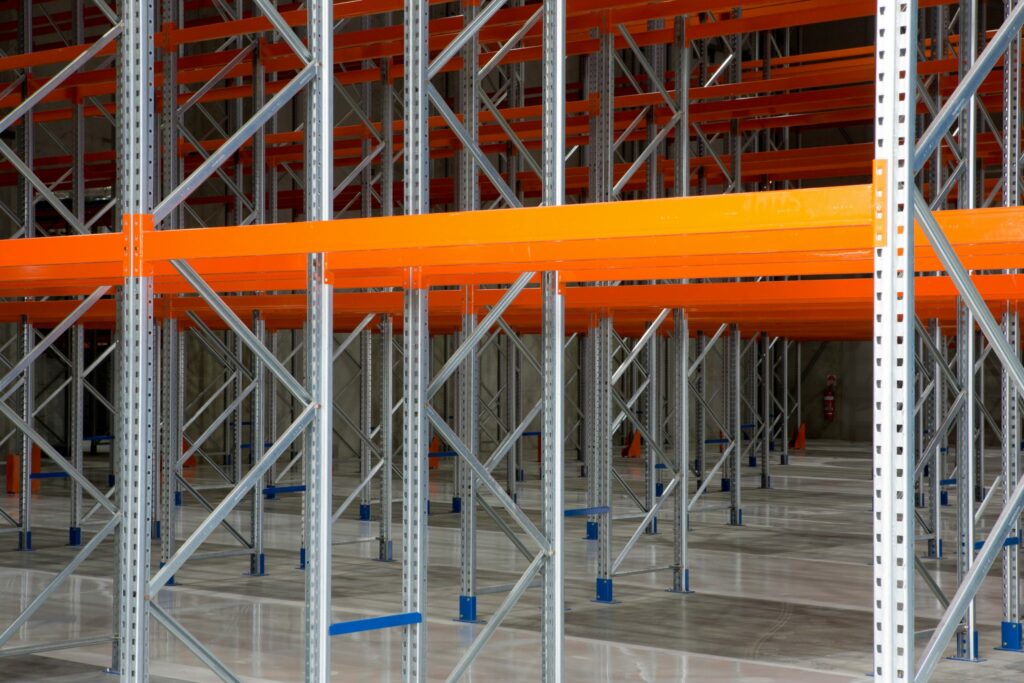
The horizontal bar joining the frames together. Beams slot into holes in the upright, which is what lets you move levels up and down as your stock changes.
Lengths and profiles vary depending on how many pallets you're storing per level and how heavy they are. A lot of our customers call them rails.
Bay
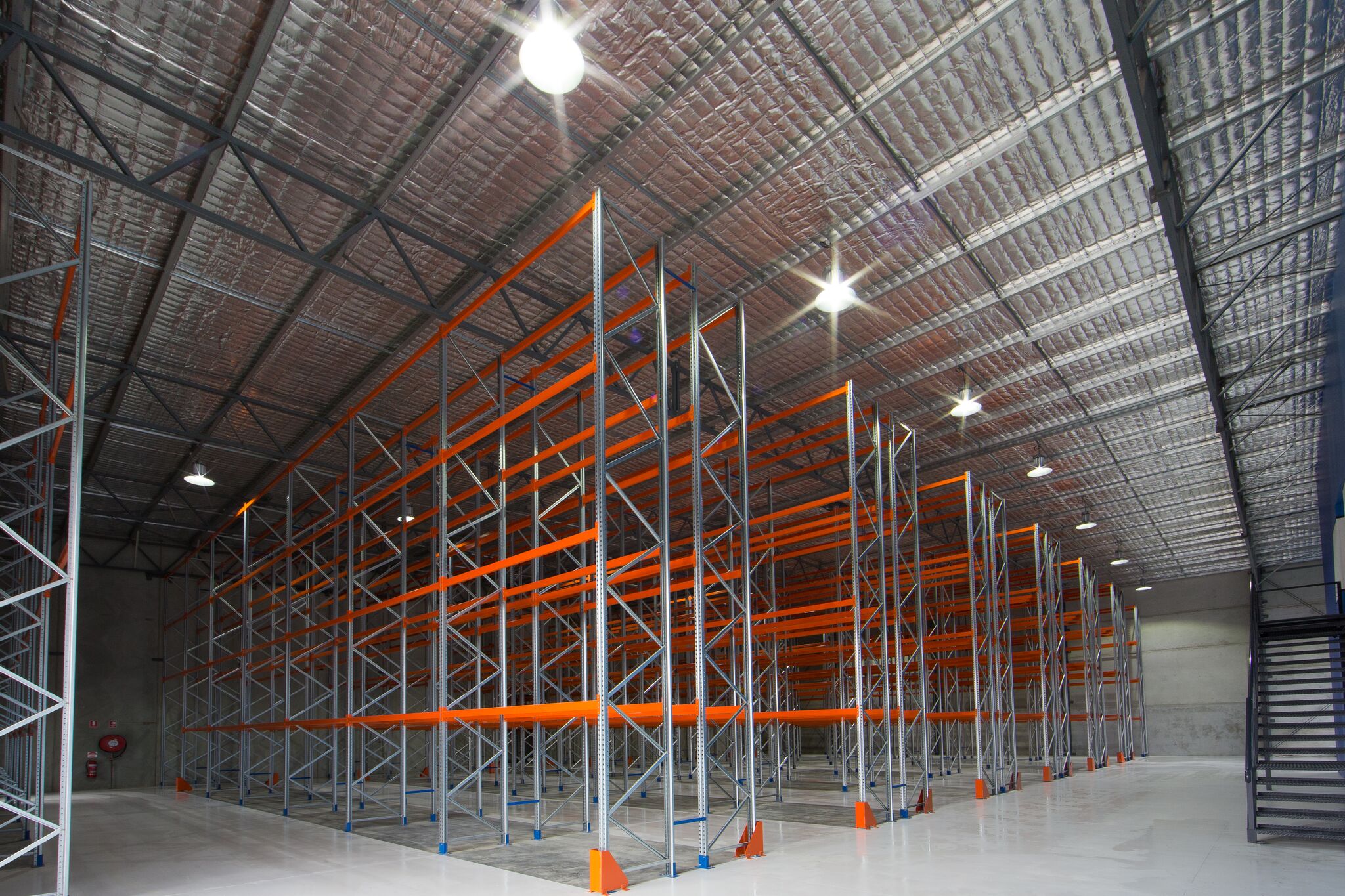
One section of racking: two frames with beams between them. Bays are the unit you buy in, so a quote for a twelve bay run means twelve sections side by side, sharing frames between them.
Beam Level
One horizontal row of storage within a bay. A four level bay has four beam pairs, or three plus the floor position.
Allow at least 150mm between the top of the pallet and the beam above it. Across four or five levels, that clearance is often the difference between fitting another level in or not.
Pallet Position
Space for one pallet. It's the number that matters when you're comparing what a layout will actually hold, since bay counts vary with beam length.
Footplate
The plate at the base of each upright that bolts to the floor. Floor fixings are only as good as the slab underneath, which is why older or post-tensioned slabs need checking before design.
Safety Pin
Also called a beam locking pin. It stops a beam lifting out of the upright if a forklift catches it on the way up. Small part, and one of the first things checked in an inspection.
Upright Protector
A guard fitted to the base of an upright in aisles with heavy forklift traffic. Cheaper than replacing a frame, and considerably cheaper than the alternative. Part of our rack protection range.
Row Spacer
Connects two runs of racking back to back, keeping them square and at the correct distance apart.
Load Rating Sign
Signage displaying the rated capacity of the racking. Displaying it is a requirement under AS4084 once the system is in service, and we supply signage with every install.
UDL (Uniformly Distributed Load)
How capacity is rated. It assumes weight spread evenly across the beam pair, not concentrated in the middle or at one end. A single heavy item in the centre of a beam is a different load case, so if that's how you store, say so at design stage.
Racking Systems
Selective Pallet Racking
Selective racking is the most common system. It's called selective because you can take any pallet without moving another one first, and it's the most cost effective option on a cost-per-pallet-position basis. Also known as adjustable pallet racking.
Double Deep Racking
Double deep racking stores pallets two deep in each position, cutting the number of aisles you need. Requires a specialist reach truck or an attachment fitted to your existing one.
Drive-In Racking
Drive-in racking uses continuous lanes with pallets on rails and no aisle between runs. The forklift drives into the lane itself, and it works last in, first out.
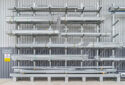
Cantilever Racking
Cantilever racking has arms extending from a central column with no front upright, which is what lets it hold timber, steel, pipe and sheet material.
VNA (Very Narrow Aisle)
A selective layout with the aisles narrowed and the racking taken higher, worked by a specialist truck. More pallet positions in the same footprint without losing selectivity.
AS4084
The Australian standard for steel storage racking. It covers design, load rating, installation, floor fixing, signage and inspection. Everything we install is built to it.
Still Not Sure What You're Looking At?
If you're comparing quotes and the specs don't line up, or you've inherited racking and don't know what it's rated to, give us a call on 1300 551 281 or submit an enquiry. We install nationally and we're happy to talk it through.