Every warehouse has stock that doesn't play by the rules. Timber that's six metres long. Steel beams too heavy for standard shelving. Cable reels that won't sit flat on a pallet. Conduit bundles that topple sideways no matter how you stack them.
When inventory doesn't fit a standard pallet, most businesses default to floor-stacking or improvised solutions, and the costs add up fast. Wasted floor space, safety risks, damaged stock, and slower pick times are all symptoms of the same root problem: using the wrong racking for the wrong inventory.
This guide walks through the most common types of difficult inventory Australian businesses deal with, and the racking systems designed specifically to handle them.
The Real Cost of Getting It Wrong
Floor-stacking might seem like the path of least resistance, but it creates compounding problems:
- Wasted vertical space. Stock spread across the floor means you're paying for ceiling height you'll never use.
- Safety hazards. Unstable stacks, blocked aisles, and manual handling of heavy items increase the risk of workplace injuries.
- Slower operations. When items aren't stored in purpose-built systems, retrieval takes longer, and double-handling becomes the norm.
- Stock damage. Pipes get bent. Timber warps. Cable insulation gets scuffed. Damage that could have been avoided with proper support.
The right racking system solves all four problems at once and typically pays for itself within months through improved space utilisation and reduced handling time.
Cantilever Racking: Built for Long, Bulky and Irregular Items
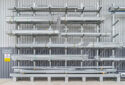
Cantilever racking is the go-to solution for inventory that's too long, too awkward, or too heavy for conventional pallet racking. Instead of horizontal beams connecting two uprights, cantilever systems use adjustable arms extending from a single row of columns, giving you unobstructed access from the front.
This design makes it ideal for:
- Timber and lumber — store full-length boards without bowing or warping
- Steel sections, pipes and tubes — heavy loads supported evenly across multiple arms
- Conduit, strut and cable trays — keep long electrical materials organised and accessible
- Building supplies — plasterboard sheets, roofing materials, PVC pipes
- Furniture and appliances — bulky items that don't fit standard pallet positions
Single-Sided vs Double-Sided
Cantilever racking comes in two configurations:
Single-sided runs are placed against a wall, with arms extending one direction. Best for maximising space along warehouse perimeters or in narrow areas.
Double-sided runs are freestanding, with arms extending both ways from a central column row. These deliver higher storage density and work well in open floor areas where you can access both sides.
The choice depends on your building layout and how often you need to access each face. Our team can assess your space and recommend the best configuration for your operation.
Heavy Duty vs Light Duty
Not all cantilever racking is built the same:
- Heavy duty cantilever racking handles the serious loads: structural steel, large timber sections, heavy pipe bundles. Column and arm gauges are thicker, base plates are wider, and the system is engineered for sustained heavy use.
- Light duty cantilever racking suits lighter or less frequently accessed stock: conduit, smaller diameter pipes, furniture, or retail overstock. It's a cost-effective option when load requirements are more moderate.
Matching the duty rating to your actual stock weight prevents both overspending on capacity you don't need and underspecifying a system that can't handle the job.
Cable Reel Racking: Purpose-Built for Heavy Drums
Electrical wholesalers, data cabling suppliers, and industrial distributors all deal with the same challenge: cable reels are heavy, round, and awkward to store on flat surfaces.
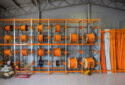
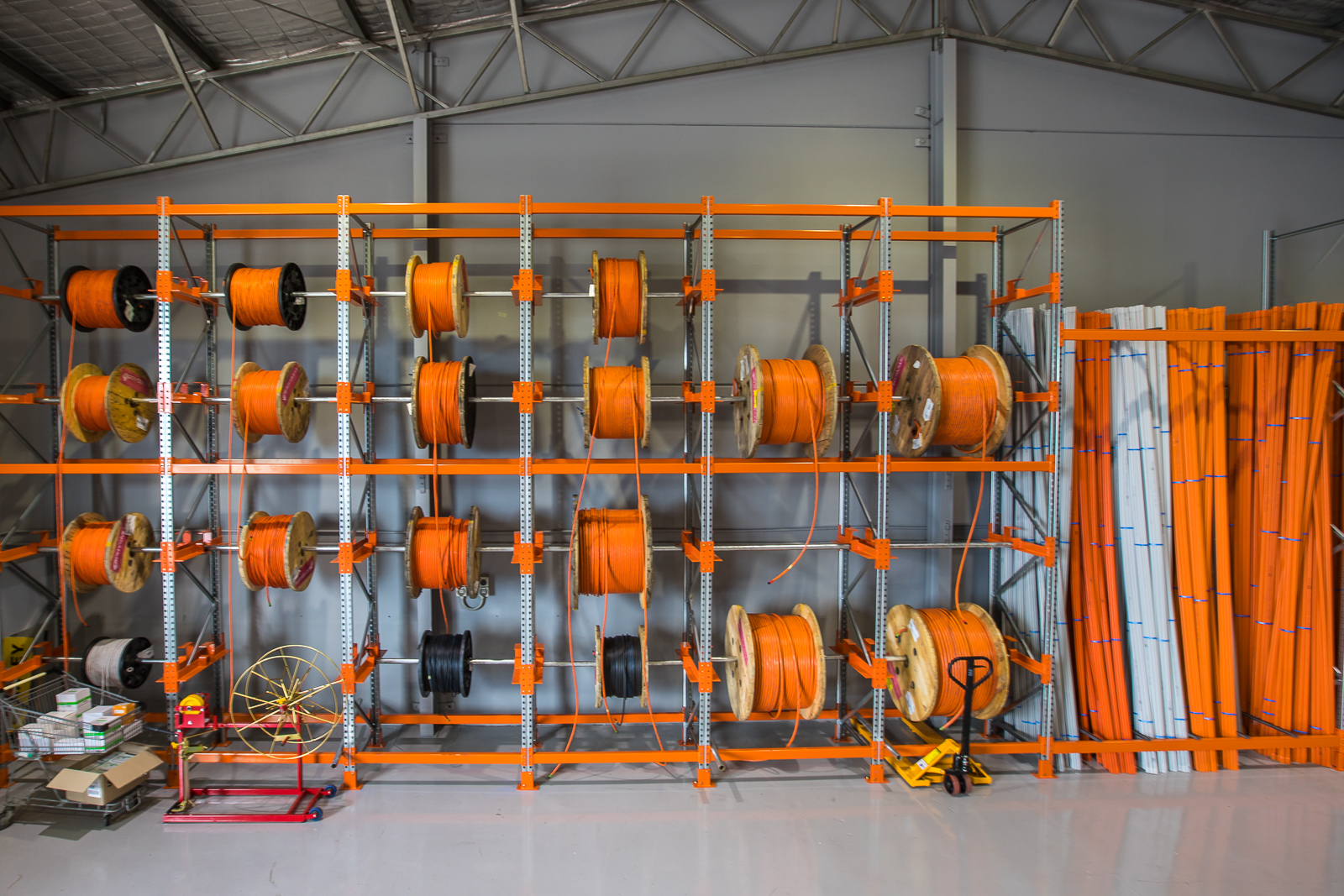
Purpose-built cable reel racking uses cradle-style supports or horizontal bars that hold reels securely in place. Stock is organised by cable type and size, and dispensing is straightforward, just pull what you need without moving other reels out of the way.
A well-designed cable reel bay typically holds 3–4 sets per bay, depending on reel diameter. This keeps heavy drums off the floor, reduces manual handling, and makes stock counts faster.
Selective Pallet Racking: Still the Foundation
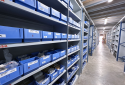
Even when your operation handles a lot of non-standard inventory, selective pallet racking usually forms the backbone of the storage system. It handles the palletised portion of your stock such as boxed goods, wrapped products, smaller items consolidated onto pallets.
The key is pairing selective racking with the right accessories:
- MDF shelves for smaller items that don't justify a full pallet position
- Mesh decks for ventilation, fire sprinkler compliance, and visibility
- Pallet cages for securing loose or small items that would otherwise fall through
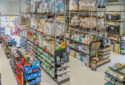
When you combine selective racking for standard stock with cantilever racking for awkward items and purpose-built solutions for specialty stock like cable reels, you get a system where everything has a proper home.
Matching the System to the Industry
Different industries face different inventory challenges. Here's how the right racking combination solves common problems:
Building and plumbing supplies
Long lengths of timber, pipe, conduit, and strut alongside palletised fixings and fittings. A mix of heavy duty cantilever (for long stock) and selective pallet racking (for palletised goods) covers both needs.
Electrical wholesalers
Cable reels, conduit runs, and boxed components. Cable reel racking, cantilever for conduit, and selective racking with shelves for smaller electrical parts.
Manufacturing and fabrication
Raw materials (steel plate, bar, tube) plus finished goods. Heavy duty cantilever handles the raw materials; selective racking stores the finished product.
Transport and logistics
Irregularly shaped freight, oversized items, and mixed SKU ranges. Cantilever for oversized items combined with selective racking for standard pallets gives maximum flexibility.
Real-World Example: Haymans Electrical, Emerald QLD
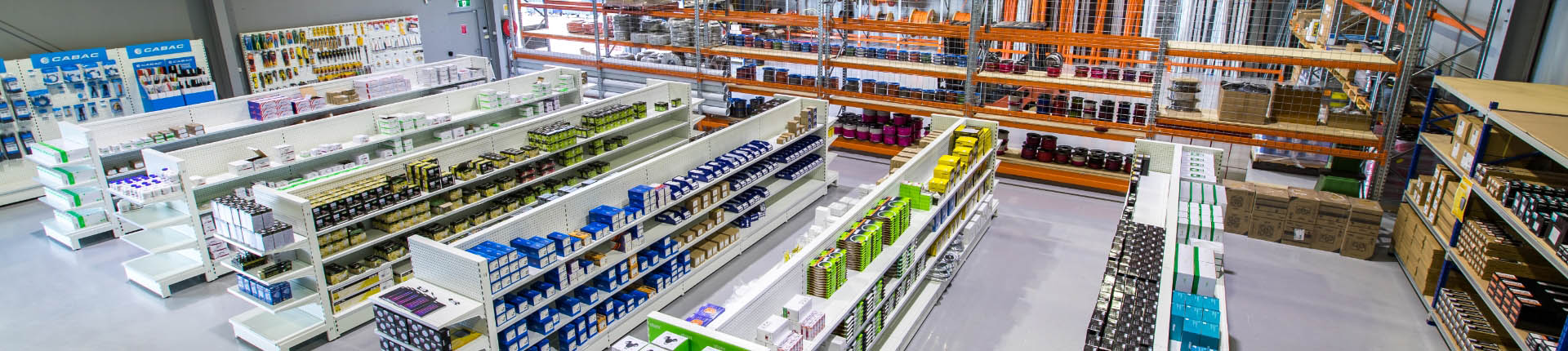
When Haymans Electrical fitted out their new 1,200-square-metre Emerald branch, they faced exactly this challenge. Their inventory included palletised electrical goods, heavy cable reels, and long runs of conduit and strut; no single racking type could handle everything.
The solution combined multiple systems working together:
- Selective pallet racking with MDF shelves and mesh decks for palletised and boxed stock
- Cable reel racking with custom bays holding 3–4 reel sets each
- Conduit and cantilever racking with adjustable arms for long electrical materials
- Heavy-duty workbenches for onsite assembly and order preparation
The result was a warehouse where every product type had a purpose-built storage position: no floor-stacking, no improvisation, no wasted space.
"My overall experience with Storeplan has been smooth and seamless. I'd definitely recommend the team at Storeplan for all your racking and warehousing needs."
Matt Jang, Store Manager
How to Get Started
Choosing the right racking for difficult inventory starts with understanding three things:
1. What you're storing
Dimensions, weights, quantities, and how stock is received and dispatched.
2. Your building constraints
Clear height, column positions, floor capacity, and available footprint.
3. How your team works
Forklift types, pick frequency, and operational flow.
With those inputs, the right combination of racking systems becomes clear. Our team has over 30 years of experience designing storage solutions for Australian businesses across every industry, from single-warehouse operations to multi-site fit-outs.
Not sure which system suits your stock? A site assessment takes the guesswork out of it. We'll review your inventory, measure your space, and recommend a configuration that delivers the best result.