With so many systems available, choosing the right option requires an understanding of how different racking styles work and the advantages each one provides.
This guide gives a clear overview of the main warehouse racking systems used across Australian facilities and highlights the essential considerations that will help you make an informed decision.
Standard Pallet Racking
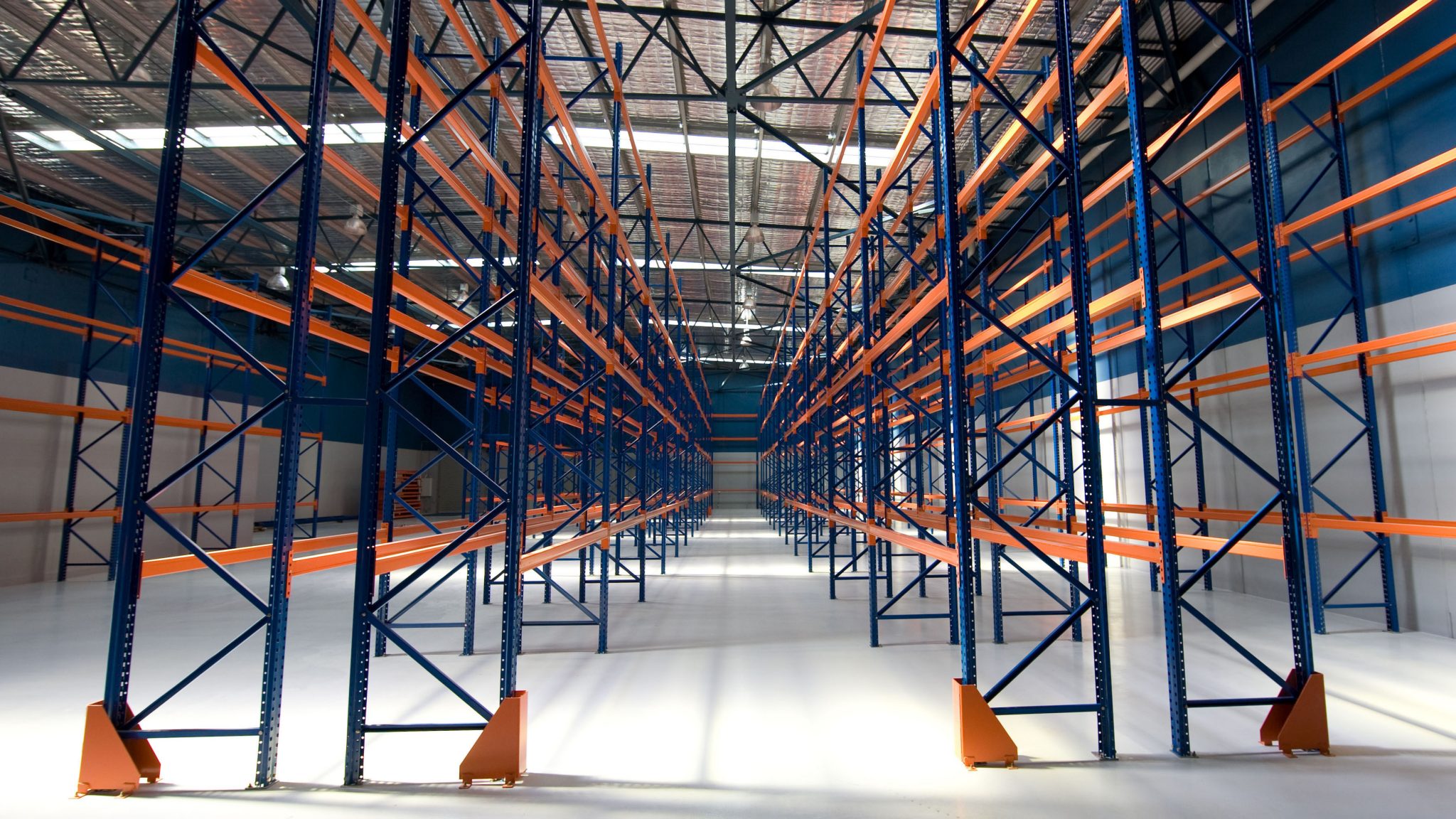
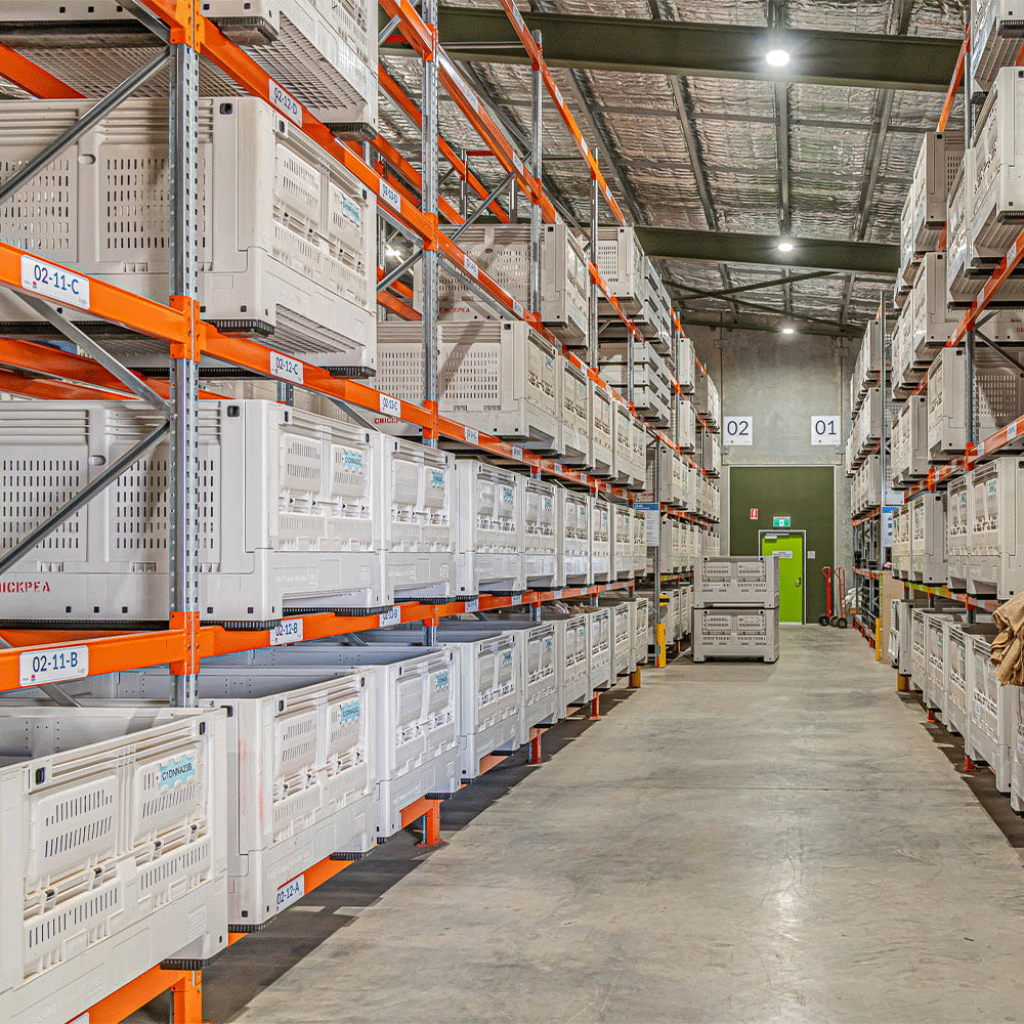
Standard pallet racking is the most common and versatile storage system found in warehouses. It supports direct access to every pallet, making it ideal for operations with a broad range of stock, high SKU diversity and frequent picking.
Best for
- Warehouses with mixed product ranges
- General distribution centres
- Fast moving consumer goods
- Businesses needing high accessibility
Benefits
- Flexible beam levels, easily adjusted as stock changes
- Suitable for most pallet sizes and loads
- Compatible with standard forklifts
- Straightforward to maintain and inspect
Key considerations
- Ensure aisle widths match your forklift type
- Confirm ceiling height and slab capacity support your design
- Add upright protection where forklift traffic is heavy
- Consider future expansion and growth when planning your layout
Standard pallet racking is typically the foundation of most warehouse layouts because it strikes a balance between access, safety and capacity.
Double Deep Pallet Racking
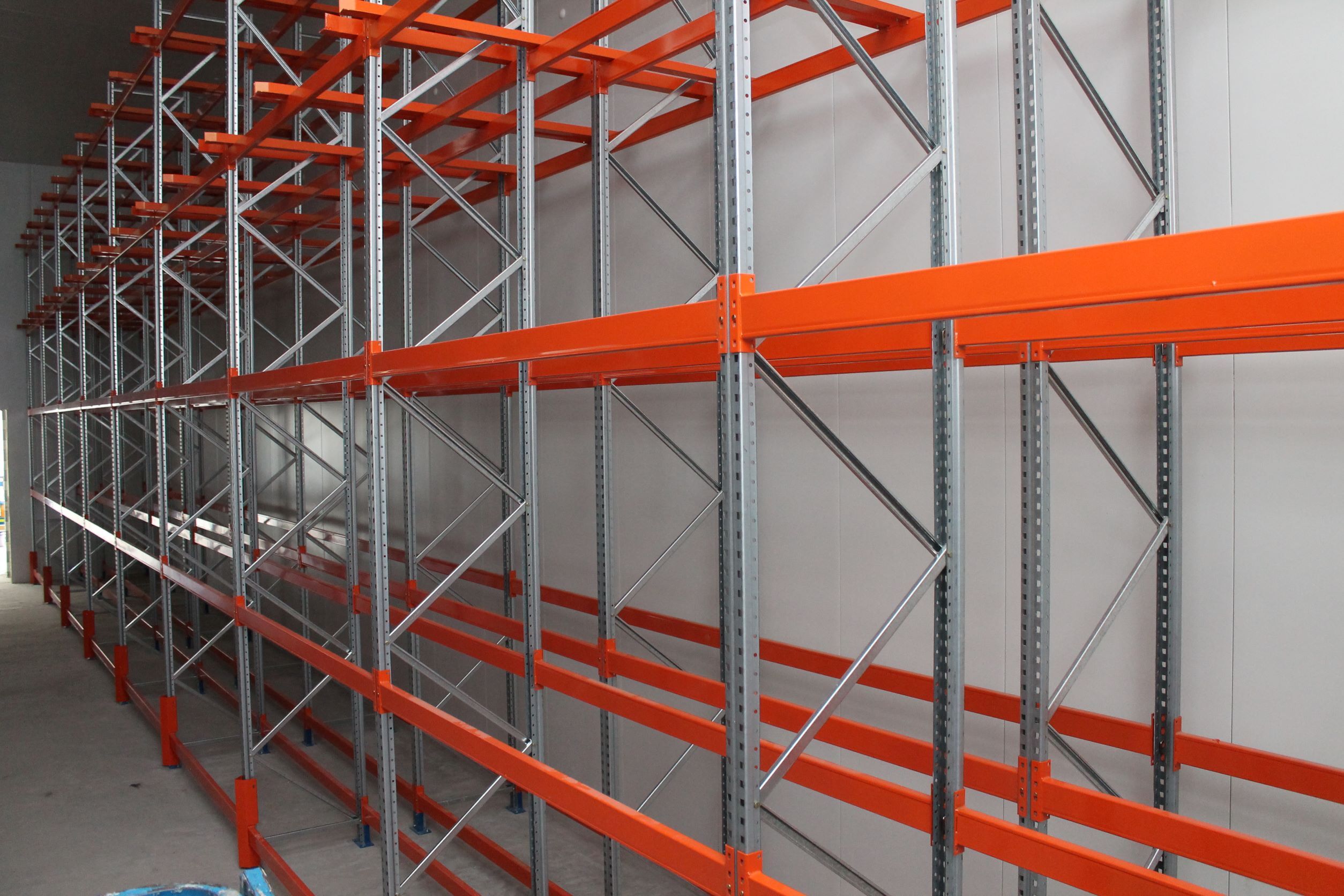
Double deep racking increases capacity by storing pallets two positions deep. It reduces the number of aisles required and offers higher density without sacrificing accessibility.
Best for
- Businesses with bulk stock of similar products
- Warehouses with moderate stock rotation
- Operations needing to increase storage without expanding their footprint
Benefits
- Higher storage capacity
- Efficient use of available floor area
- Reduced aisle requirements
- Good compromise between selective access and dense storage
Key considerations
- Reach trucks or forklifts with extension capabilities may be required
- Accessing pallets at the back position is slower
- Works best for products with predictable turnover
- Inventory control must account for reduced selectivity
Double deep racking is often chosen when a business wants more storage but is not ready to invest in a full high-density system.
High Density Racking Systems
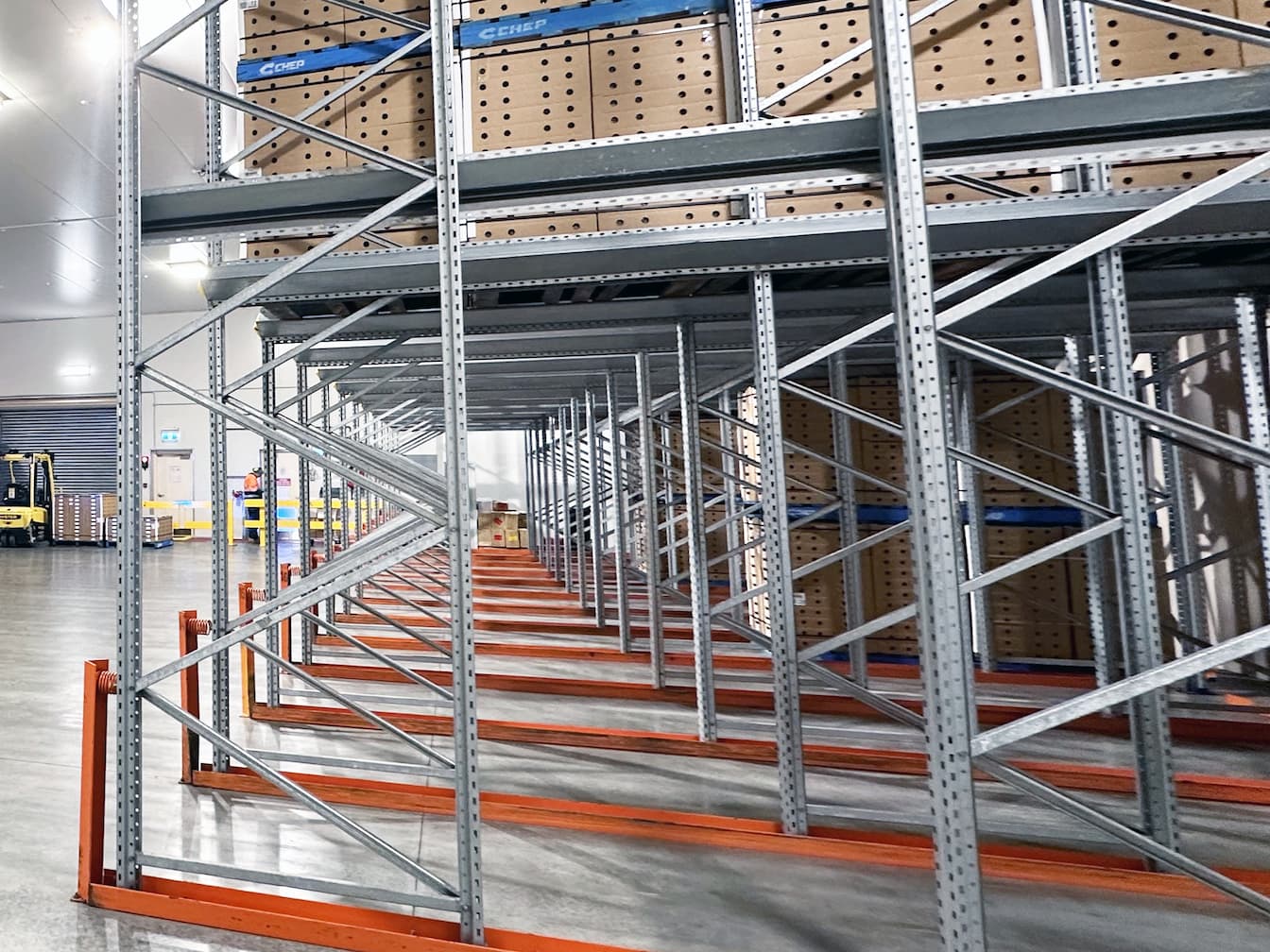
High density racking maximises storage per square metre by allowing pallets to be stored multiple positions deep. These systems suit operations with large volumes of homogeneous products and are ideal for environments where space efficiency is a top priority.
Main system types
Push Back Racking
Pallets sit on wheeled carts that move backward as new pallets are loaded. This system works on a LIFO basis and provides a good level of density without sacrificing too much accessibility.
Drive In or Drive Through Racking
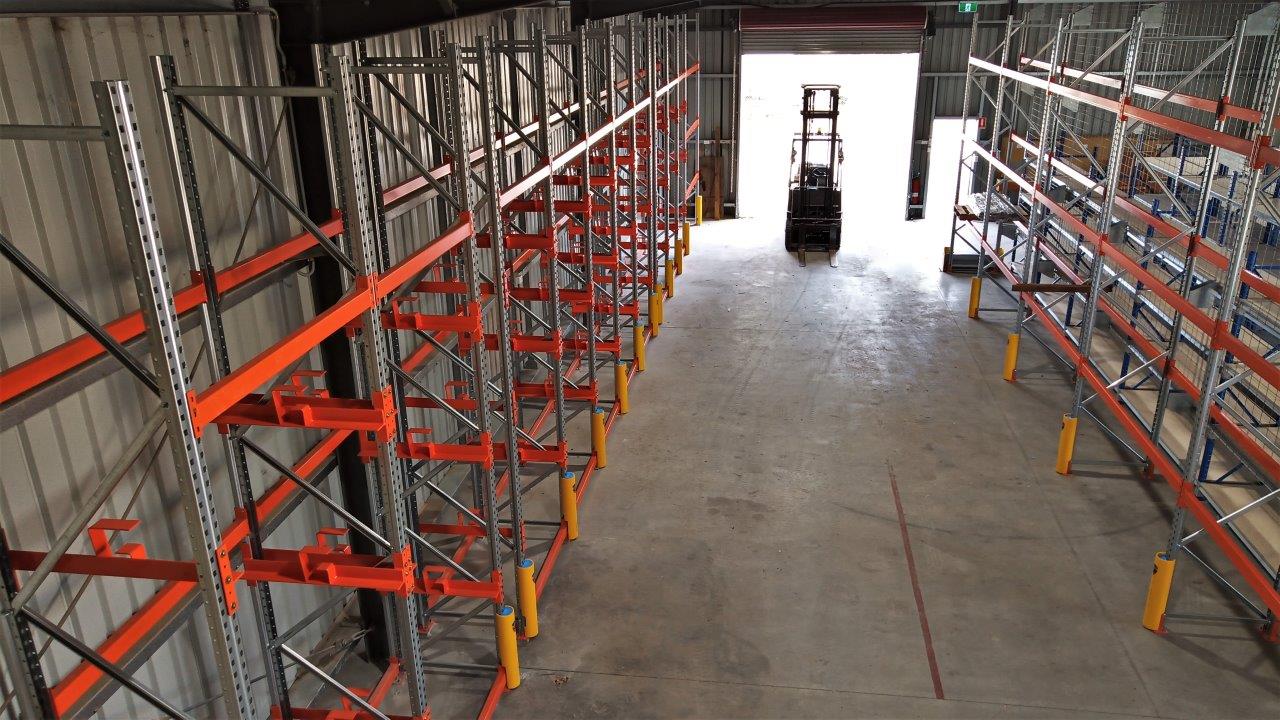
A series of pallet lanes that allow forklifts to drive into the structure to place or retrieve stock. Suitable for storing bulk quantities of the same item. Drive In is LIFO, while Drive Through can support FIFO.
Pallet Flow Racking
Uses gravity rollers so pallets move from the loading side to the picking side. Ideal for FIFO requirements, expiry based stock and high turnover operations.
Best for
- High volume storage
- Repetitive product lines
- Cold storage and food distribution
- Bulk storage zones within larger facilities
Benefits
- Maximises usable storage capacity
- Reduces aisle space
- Highly efficient for repeat stock
- Improves space utilisation in smaller or high cost areas
Key considerations
- Lower selectivity compared with standard pallet racking
- Forklift operators require skill and proper training
- Maintenance and safety checks must be regular
- Stock rotation planning becomes essential
High density systems deliver significant capacity improvements but should be chosen based on your exact stock profile and turnover pattern.
Specialty Racking
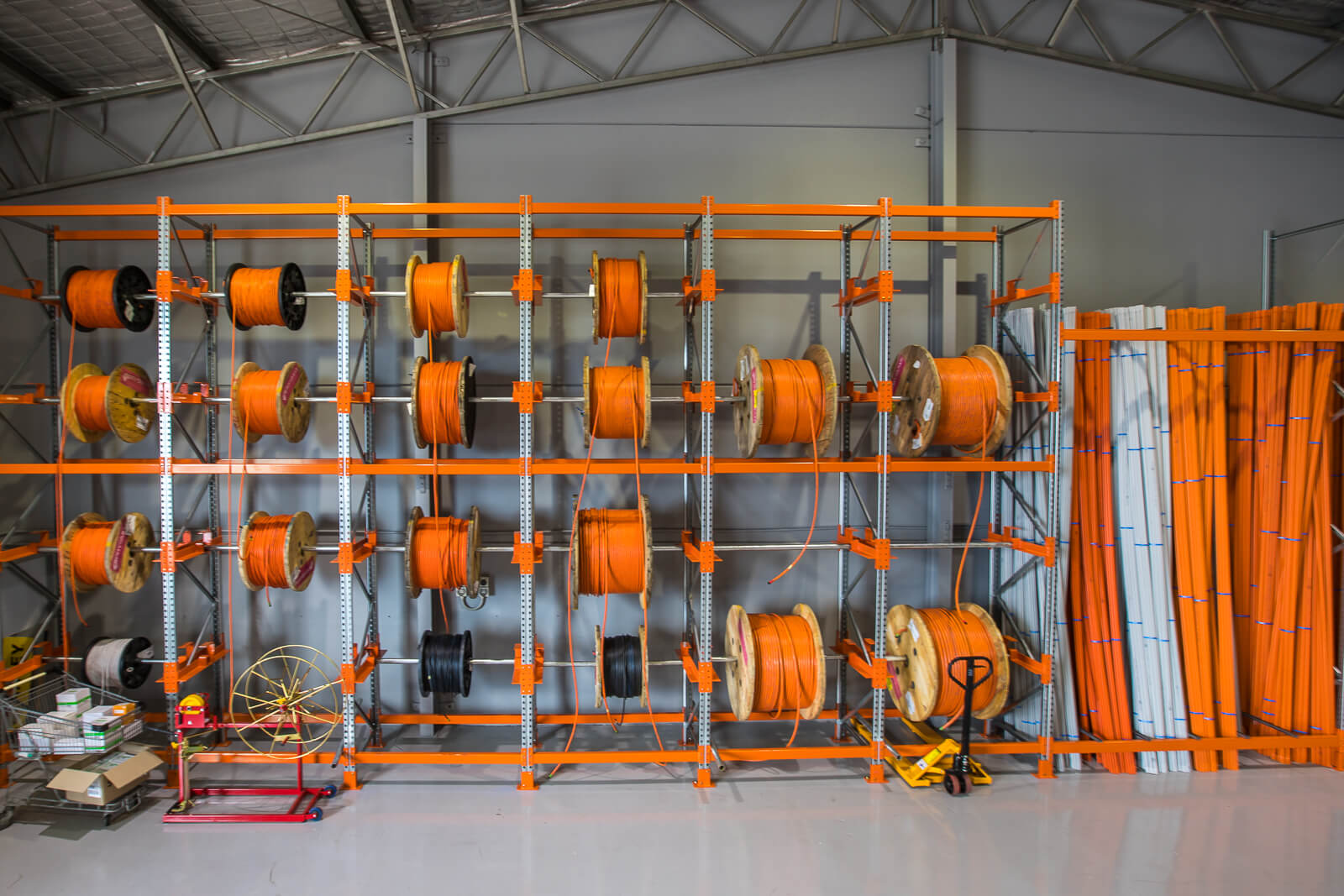
Many businesses work with oversized, long, irregular or heavy items that do not fit a standard pallet. Specialty racking systems are purpose built to support these materials safely and efficiently.
Common specialty systems
Cantilever Racking
Designed for long goods such as timber, steel, pipe, tubing and extrusions. Provides clear front access and easy loading.
Sheet and Panel Racking
Used for sheet materials, including plasterboard, metal sheets, panels and doors.
Coil and Drum Racking
Holds round or cylindrical items securely with cradles or reinforced supports.
Cable Reel Racking
Allows drums or reels to be mounted on spindles for clean cable pay out.
Tyre Racking
Suitable for automotive, mechanical and transport operations storing tyres safely and efficiently.
Benefits
- Improves organisation and accessibility
- Reduces damage from incorrect storage
- Supports safer handling of non standard goods
- Maximises space dedicated to awkward or bulky inventory
Key considerations
- Check weight and length limits
- Ensure compatibility with forklifts or handling equipment
- Allow space for safe lifting and turning
- Consider whether stock will grow or change over time
Key Factors When Choosing a Racking System
Selecting the right racking system requires aligning your choice with the needs of your warehouse and the way your team works.
Product Type
Weight, shape, size, and turnover
Equipment compatibility
Forklifts, reach trucks and picking equipment
Space constraints
Ceiling height, column positions and slab capacity
Safety
Impact protection, clear access paths and compliance with standards
Flexibility
Ability to reconfigure or expand in the future
Budget and ROI
Weigh upfront cost against long term efficiency
Compliance
Ensure all systems meet AS4084 and related standards
Final Thoughts
Whether you need a general storage solution, a high-density layout or a specialised system for unique products, a well designed racking strategy can transform the way your warehouse operates.
If you would like support reviewing your layout or choosing the right system, Storeplan can help you design a solution that fits your workflow and future plans.
Get Expert Advice