

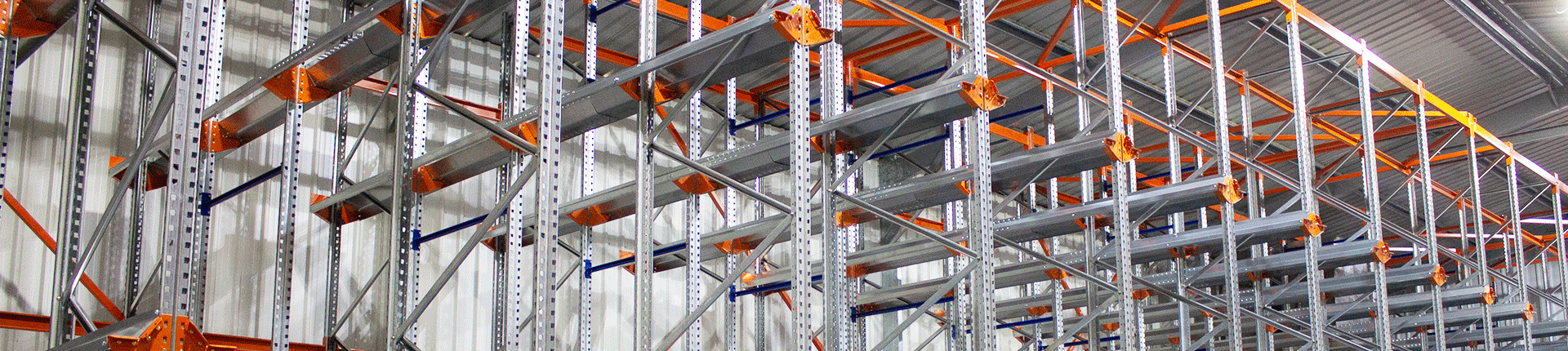
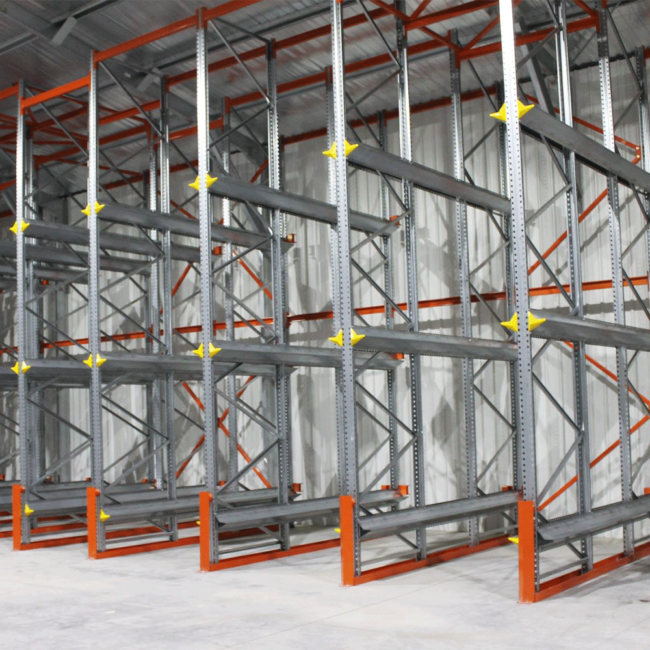
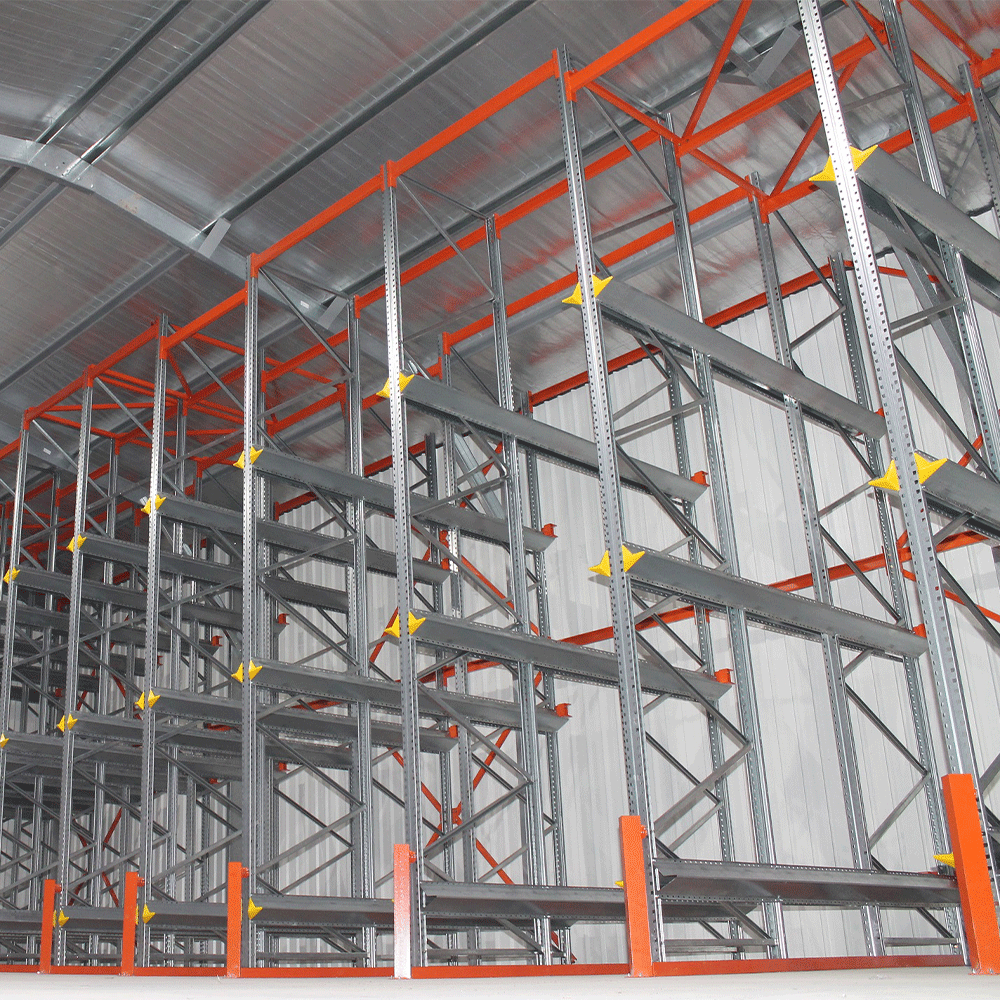
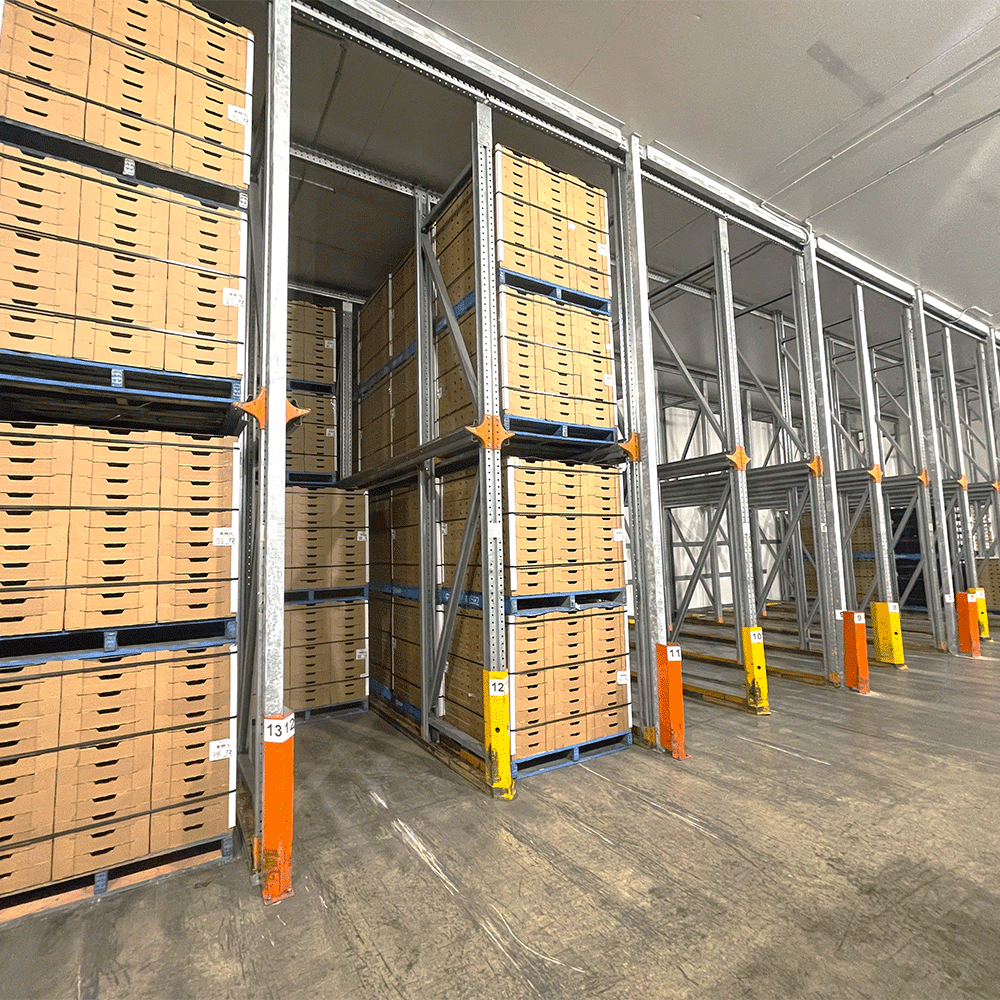
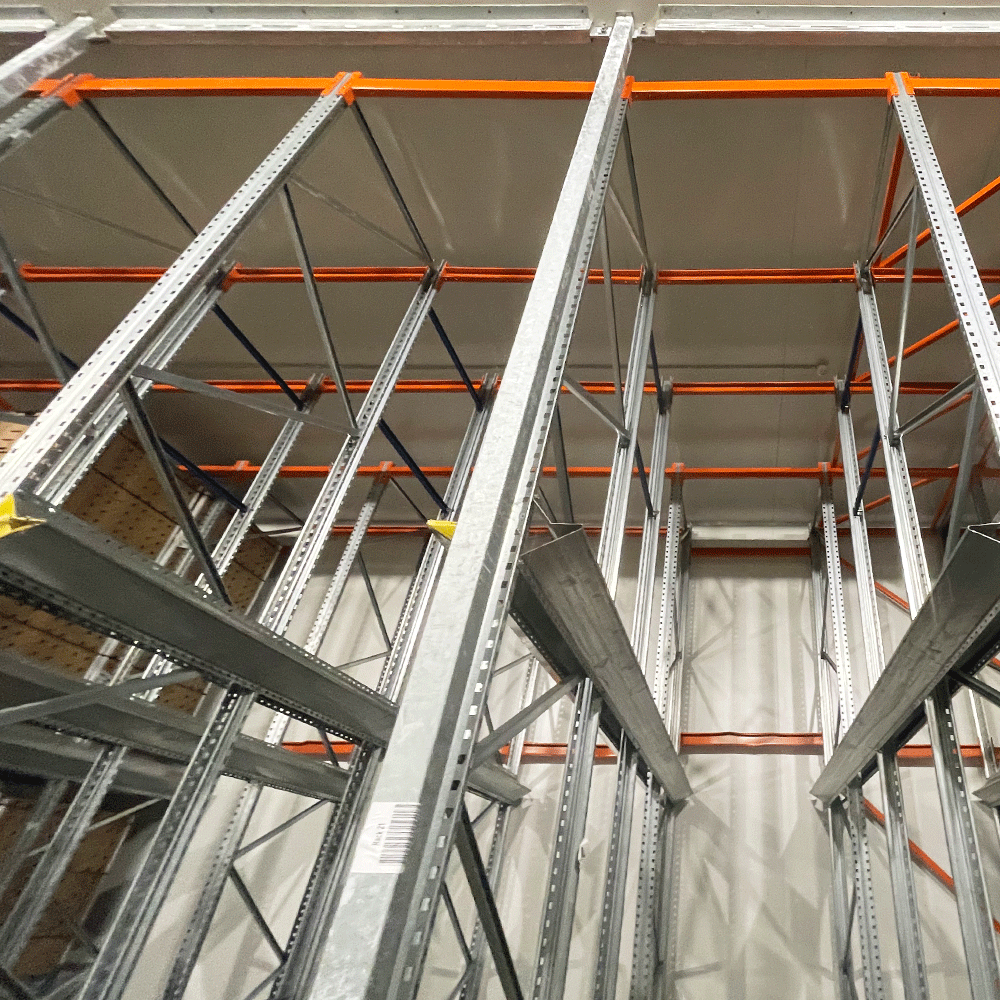
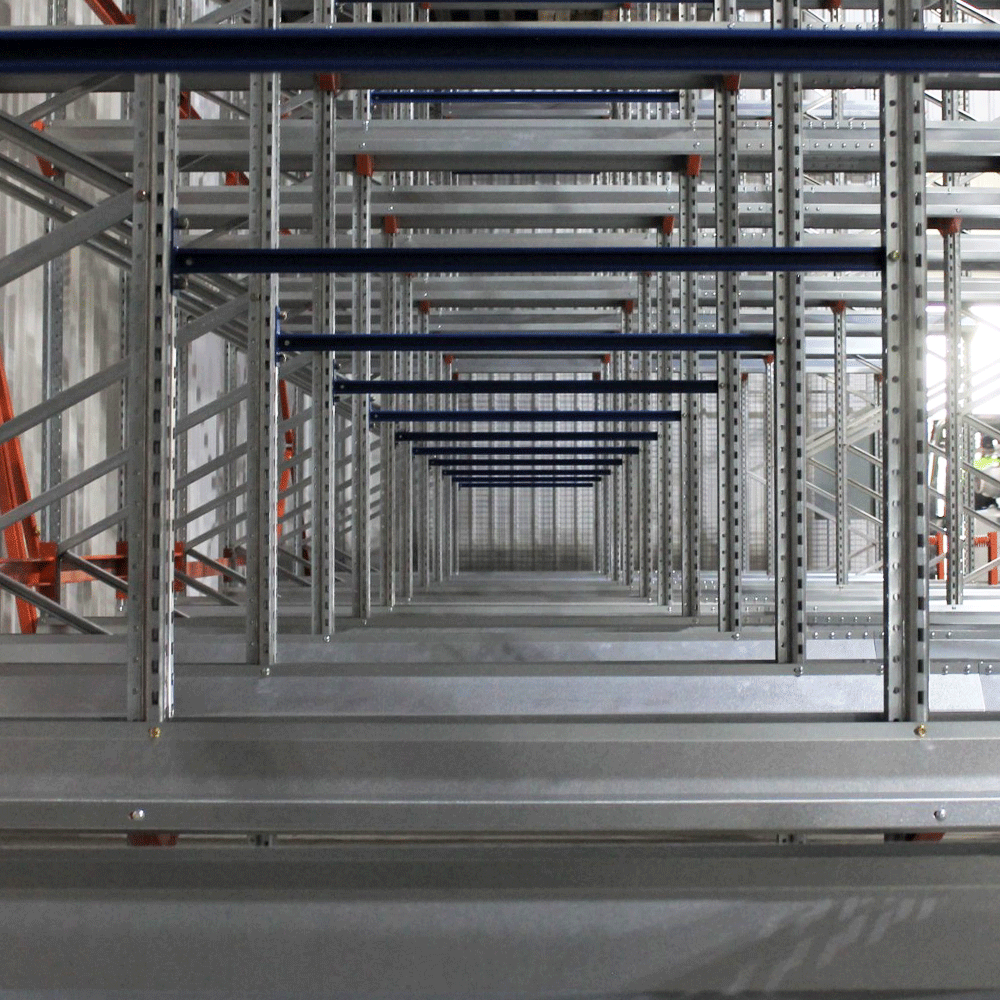
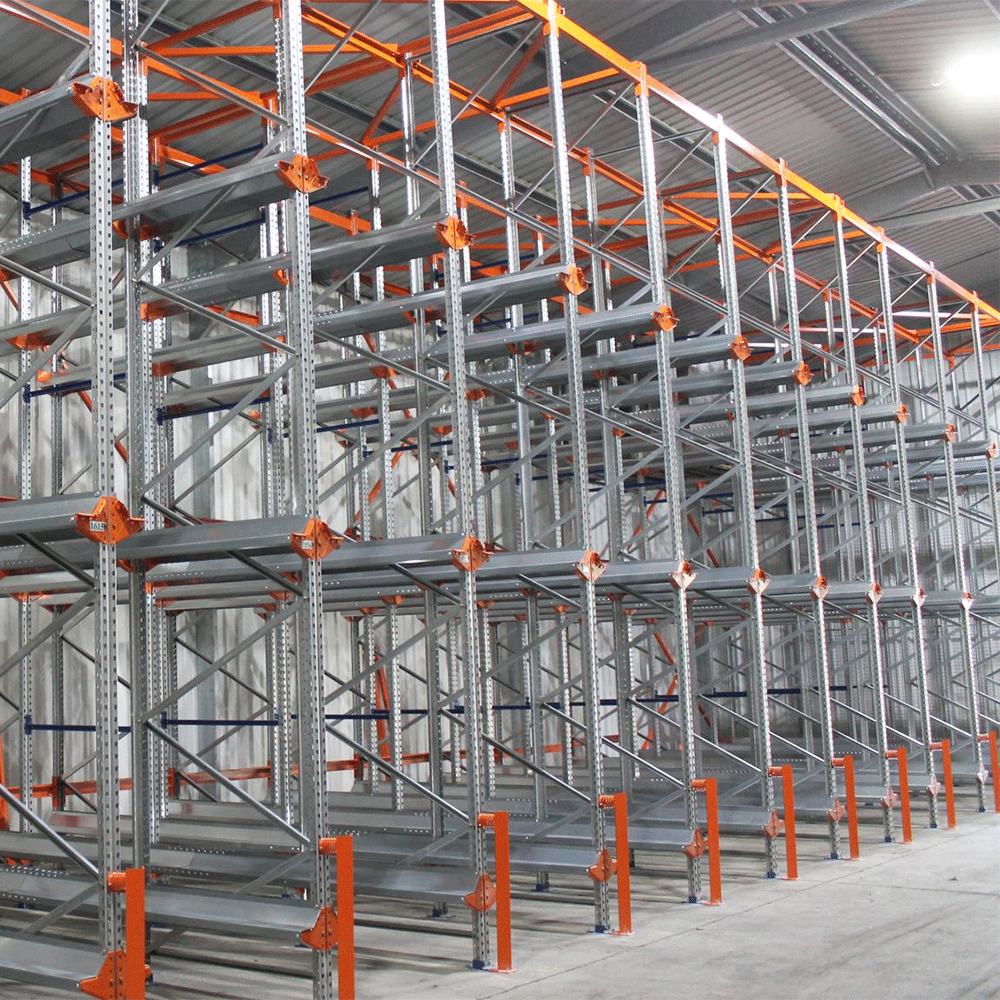
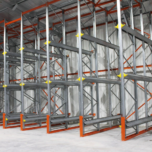
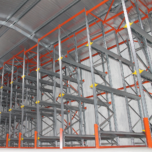
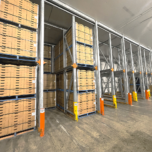
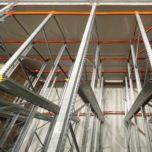
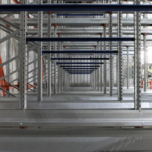
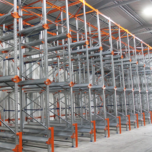
A drive-in racking system stores pallets in continuous lanes, reducing the floor space needed for access aisles. Drive-in pallet racking suits large quantities of similar products, with counterbalance or reach trucks entering the lanes to load and retrieve pallets.
Loading and unloading take place from the same end using First-In Last-Out (FILO) stock handling. We help plan lane configurations around your pallet loads, forklift access and stock rotation requirements.
Categories: Pallet Racking Systems
Get A Free Quote- Description
Drive-In Racking for High-Density Pallet Storage
Drive-in pallet racking makes more room for bulk stock by reducing the number of access aisles within a storage block. It is particularly suited to large quantities of homogeneous products: many pallets of the same product stored together, rather than a wide range of products requiring individual access.
How Does a Drive-In Racking System Work?
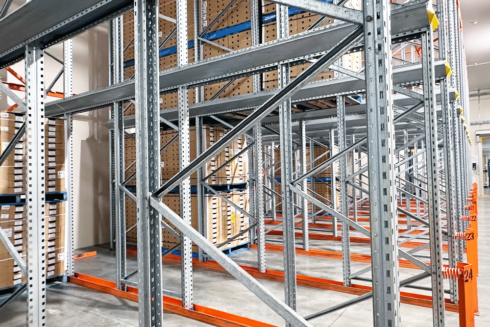
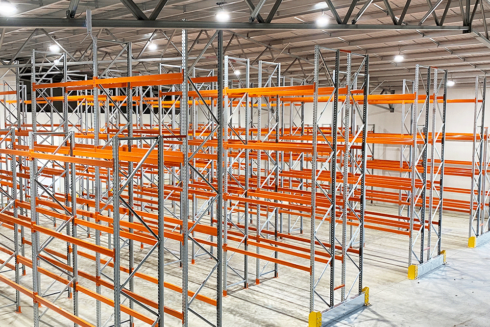
The system consists of continuous storage lanes with pallet support rails along each side. A counterbalance or reach truck enters the lane to place or retrieve pallets. Loading and unloading take place from a single access aisle at the same end of the racking.
Drive-in racking operates on a First-In Last-Out (FILO) basis, also called Last-In First-Out (LIFO). The first pallet loaded sits furthest inside the lane and is retrieved after the pallets in front of it. Stock rotation therefore needs to be planned across lanes and batches; the system does not automatically deliver first-in, first-out access.
Drive-In Pallet Racking Features and Specifications
- Storage layout: continuous lanes served by a single load and retrieval aisle.
- Stock handling: FILO operation for large quantities of similar products.
- Pallet support: rails along each side of the lane support the pallets.
- Handling equipment: counterbalance or reach trucks, with compatibility checked against the lane dimensions, operating clearances and loaded pallet sizes.
- Space utilisation: 60% net pallet area usage of the overall warehouse area. This describes the area occupied by pallets; the achieved percentage depends on the warehouse layout and access requirements.
- Product protection: supported pallet storage, with correct pallet positioning and careful forklift operation essential to protect stock and the rack structure.
- Compliance: our drive-in pallet racking systems comply with applicable Australian safety standards.
Is Drive-In Racking Suitable for Your Warehouse?
The strongest fit is a stock profile with a high number of pallets per product line and goods that can be loaded and retrieved in batches. Manufacturers, wholesale distributors and food-processing operations can use this approach where their stock rotation requirements suit FILO handling.
The trade-off for storage density is access. Pallets behind the front positions cannot be retrieved directly. If your operation needs frequent access to many different product lines, or strict first-in, first-out rotation, compare other industrial pallet racking systems before choosing a layout.
Planning Lane Depth, Pallet Loads and Forklift Access
A suitable design starts with your pallet dimensions, loaded pallet heights and maximum weights, together with the number of pallets held per product. Pallet condition and compatibility with the support rails also need to be checked.
Lane depth affects both storage capacity and handling time. Deeper lanes hold more pallets but require the forklift to travel further into the structure. The design should also account for truck width, mast and load clearances, available building height and the access aisle outside the racks.
There is no single load capacity or lane depth suitable for every warehouse. These should be established for your stock and site rather than selected from a generic figure.
Drive-In and Drive-Through Racking: What Is the Difference?
Drive-in racking is loaded and unloaded from the same end and uses FILO handling. Drive-through racking provides access at both ends, allowing pallets to be loaded from one side and retrieved from the other to support first-in, first-out stock movement. The choice depends on your rotation requirements and the space available for access aisles.
Plan Your Drive-In Racking System with Storeplan
We offer site measuring, drawings and quoting services to help match the layout to your stock and handling equipment. Provide your warehouse dimensions, pallet sizes and weights, quantities per product line and forklift details so we can assess a suitable configuration.
Call 1300 551 281 or use the enquiry form to discuss your drive-in pallet racking requirements.
Drive-In Racking FAQs
Drive-in racking is a high-density storage system in which forklifts enter continuous lanes to place pallets on support rails. Reducing the number of access aisles creates more room for pallet storage. It suits large quantities of the same product where direct access to every pallet is not required.
Loading and unloading take place from the same end, so the last pallet placed in a lane is the first retrieved. This is called First-In Last-Out (FILO) or Last-In First-Out (LIFO). Allocate lanes by product and batch, and plan how each lane will be emptied and replenished. Where strict FIFO rotation is required, a different configuration may be more suitable.
It is a good fit when you hold many pallets of relatively few product lines and move stock in batches. Seasonal stock, raw materials and bulk goods can suit this approach where FILO handling is acceptable. A wide product range with few pallets per line, mixed-order picking or strict date-based rotation may need a different system. Drive-in storage can be combined with other pallet racking to suit different stock profiles.
Wholesale distributors, manufacturers, food processors and mining operations can use drive-in pallet racking for large volumes of similar products. It can also suit cold storage where storage density matters, provided the stock rotation, operating environment and handling requirements are considered in the design. The stock profile is more important than the industry label.
Provide your warehouse dimensions, pallet sizes, loaded heights and maximum weights, pallets per product line, and stock rotation requirements. We also need the forklift model and operating dimensions to check compatibility and clearances. We offer site measuring, drawings and quoting services. Call 1300 551 281 to arrange an appointment.
Drive-in racking stores pallets in continuous lanes that the forklift enters. Double-deep racking stores pallets two deep, with the rear pallet accessed after the front position is cleared. Both increase storage density by reducing aisle requirements, but double-deep generally provides access to smaller groups of pallets.
Double-deep racking can increase capacity by up to 30% compared with selective racking, depending on the layout. It requires a suitable reach truck or compatible specialist attachment. Compare equipment requirements, stock access and installation costs for your site rather than assuming one system will always be cheaper.